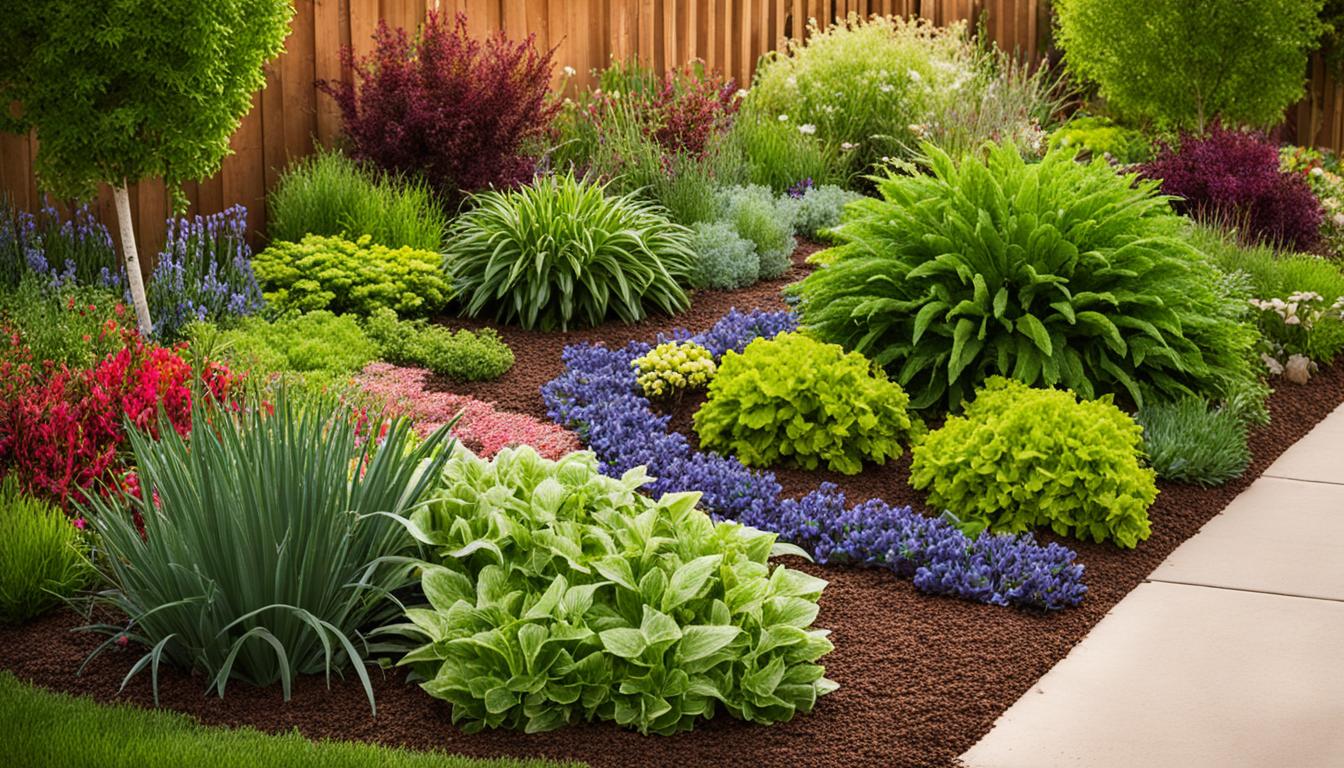
We all have a role in saving our precious water resources. This is very important for our gardens too. By making simple changes, we can make a big difference. In this article, we’ll share 10 easy ways to save water and keep your garden green and eco-friendly.
These strategies include mulching and using efficient irrigation systems. They help reduce water use and keep your garden healthy. We’ll cover everything from choosing plants that don’t need much water to using permaculture in your garden. Our goal is to help you become a better caretaker of our water resources.
Mulching: A Gardener’s Best Friend
Mulching is a key way to save water in the garden. It’s a simple method that helps plants get by with less water. By putting organic material around plants, you help the soil keep moisture in and stop it from evaporating.
Types of Mulch and Their Benefits
There are many mulch types, each with its own perks. Wood chips, leaves, straw, and compost are all good choices. Wood chips last a long time and can make the soil better. Leaves and straw look nice and are quick to break down. Compost keeps moisture in and adds nutrients to the soil.
How to Properly Apply Mulch
Applying mulch right is key. First, remove weeds and debris from the soil. Then, spread 2-4 inches of your chosen mulch around plants, keeping it away from stems or trunks. This lets water and air reach the roots. Add more mulch as it breaks down to keep saving water.
Using mulch in your garden cuts down on water use and boosts soil health. It also helps stop weeds from growing. It’s a simple but effective way for gardeners to save water.
Wise Watering Techniques
Water-efficient gardening is key. It starts with knowing how and when to water your plants. By using smart watering methods, you can keep your garden healthy and save water.
Water your plants in the coolest parts of the day, like early morning or evening. This cuts down on evaporation, so more water gets to the roots. Also, don’t overwater or underwater your plants.
Using drip irrigation or soaker hoses is another great way to save water. These systems put water right into the soil, reducing evaporation. They’re perfect for vegetable gardens, flower beds, and areas needing specific watering.
For water-efficient gardening, learn about smart watering methods and garden irrigation tips. Pay attention to when, how often, and how you water. This way, you can have a beautiful garden without wasting water.
Selecting Drought-Tolerant Plants
Gardeners wanting to save water can do well by picking plants that don’t need much water. These plants are tough and do well in dry places, so you won’t need to water them often. Adding these plants to your garden makes it look great with less water.
Native Plants Adapted to Your Region
Using plants native to your area is a smart way to save water. These plants have grown in your local climate for years. They need less care and water because they’re made for your environment. Choosing native plants helps your local ecosystem and saves water.
Xeriscaping: A Water-Wise Approach
Xeriscaping is a way to design your garden that uses plants that don’t need much water. It also includes smart watering and saving water methods. This method uses native and tough plants, mulch, and collecting rainwater to use less city water. It’s perfect for gardens in dry places.

Rainwater Harvesting Solutions
Capturing and using rainwater is a great way to save water in the garden. By putting up rain barrels, you can gather and store rainwater for later. This cuts down on the need for treated city water. Also, making a rain garden helps slow down runoff and soak up water, which helps the local water table and supports nature.
Installing Rain Barrels
Rain barrels are easy and effective for collecting rainwater. They sit under downspouts to catch rainwater from your roof. This water is good for watering plants, washing your car, or even helping with indoor water use. There are many sizes and styles of rain barrels, so you can easily find one for your garden. Using rain barrels can greatly lower your water use and your bills.
Creating a Rain Garden
Rain gardens catch and soak up runoff from your property like from your roof, driveway, or patio. They have a shallow pit and are filled with plants that like both wet and dry soil. These gardens slow down water flow and let it soak in, which helps the local water table, eases stormwater systems, and helps pollinators and wildlife. Making a rain garden is a great way to handle rainwater runoff and make your landscape more sustainable.
Nature Tips: Incorporating Permaculture Principles
Gardeners looking to make their gardens more sustainable and water-efficient can learn from permaculture. This method of gardening and landscape design copies nature to build resilience and use fewer resources. By using permaculture, you can turn your garden into a lush, water-saving haven.
One important idea in permaculture is to grow many different plants together. This way, your garden looks better and is stronger. By choosing native and drought-resistant plants, you make a garden that takes care of itself with less water and work.
Another key idea is to disturb the soil as little as possible. Unlike traditional gardens, which often get a lot of tilling and pruning, permaculture gardens use less disruption. This means using no-till gardening and natural mulches. These methods keep the soil moist and help good bugs that help plants absorb water.
Adding permaculture ideas to your garden makes it not just water-saving but also a strong, green oasis. Using permaculture gardening is a big step towards a greener, water-smarter future.
Efficient Irrigation Systems
Keeping a garden lush and vibrant can be rewarding but uses a lot of water. Luckily, there are new irrigation solutions that cut down on water use and still keep plants moist. Drip irrigation and soaker hoses are two top choices for saving water.
Drip Irrigation: Targeted Precision
Drip irrigation sends water right to plant roots, cutting down on evaporation. It uses thin tubing that slowly releases water, letting the soil soak it up. This method can save up to 50% more water than old-style sprinklers.
Soaker Hoses: Efficient Watering
Soaker hoses are great for saving water too. They have holes all along their length, letting water soak into the soil around plants. Unlike sprinklers, they don’t lose much water to evaporation, so your plants get exactly what they need.
Both drip irrigation and soaker hoses are great at saving water in gardens. By using these systems, gardeners can have healthy plants and use less water. These efficient solutions are an easy way to make your outdoor space more sustainable and eco-friendly.
Soil Preparation for Better Water Retention
Improving your garden’s water conservation starts with the soil. Adding organic stuff like compost or peat moss can make it better at holding water. This means you won’t need to water as much.
Adding Organic Matter
Adding organic soil amendments is a great way to make your soil better at holding water. Compost is a top choice because it helps with structure and water retention. Peat moss also boosts the soil’s moisture capacity. These additions create a healthier, more efficient garden.
When you add organic matter, mix it well so it spreads evenly. This helps the soil absorb and keep water better, cutting down on watering. Plus, these additions make nutrients more available, helping your plants grow strong.
Getting your soil ready with organic matter leads to a garden that’s both lush and water-wise. This simple action greatly helps with saving water and boosts your organic gardening success.
Adjusting Your Mowing Habits
Your mowing habits can greatly affect water-saving lawn care. By tweaking your mowing, you can cut down on water use and help your lawn do well with less.
Letting your grass grow a bit taller is a simple way to save water. Taller grass blades create shade, which keeps soil moist and cuts down on evaporation. Try to keep your lawn at 3 to 4 inches tall instead of the usual short cut. This change can really help with water-saving lawn care.
Also, pay attention to how you mow. Don’t cut off more than one-third of the grass length in one go, as it can harm the plants and waste water. Instead, mow more often, taking off just a little bit each time. This gentle method helps the grass stay moist and healthy.
Changing how you mow can lead to a lush, efficient lawn that needs less water. Remember, even small tweaks can make a big difference in water-saving lawn care.
Embracing Xeriscaping Designs
Gardeners and homeowners are turning to xeriscape landscaping to save water. Xeriscape uses drought-tolerant plants and smart water use. This section looks at how gravel gardens and rock features add beauty and save water to your garden.
Gravel Gardens and Rock Features
Gravel gardens and rock features are a great choice for a low-care garden. They look beautiful and help save water. These elements make a garden that needs little water but looks great.
Gravel gardens highlight drought-resistant plants like succulents and native perennials. The gravel lets water soak into the soil, cutting down on watering. Rocks like boulders and stepping stones add beauty and help with water flow, making your garden look unique.
Using these xeriscape elements saves water and makes your garden look amazing. By following water-wise design, you can make a beautiful, easy-care garden. It celebrates the beauty of plants that need little water and simple design.

Monitoring Weather and Seasonal Changes
Keeping up with the changing weather and seasons is key for gardeners who aim to save water and improve their gardens. By watching the weather and adjusting your watering, you can give your plants the right moisture at the right time. This cuts down on wasted water and helps your plants grow stronger.
Knowing what your garden needs throughout the seasons is vital for seasonal gardening. Spring brings rain, while summer gets dry. By understanding these changes, you can adjust your watering to fit your plants’ needs. This smart approach to weather-based watering helps you use less water and keep your garden healthy.
By following the natural flow of the seasons and your local climate, you can make better choices about watering. You’ll know when and how much to water, and which plants to add to your garden. This way, you can maintain a beautiful garden that’s also kind to the environment. It shows your dedication to saving this valuable resource.