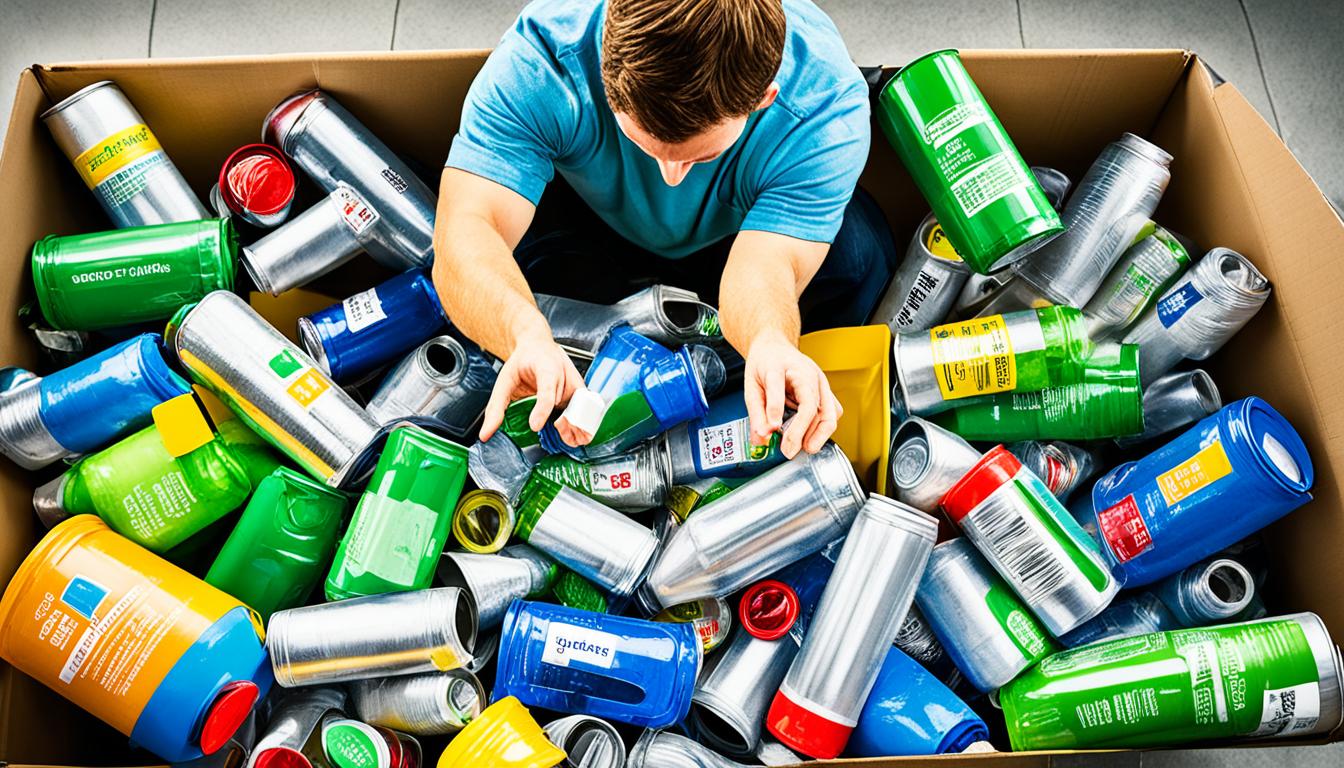
In today’s world, taking care of our planet is crucial. We’ll share 10 easy tips to help you recycle and reuse at home. These tips include simple habits and creative projects to reduce waste and save money.
By following these easy steps, you’ll help make the future greener. You’ll also feel good about turning trash into something useful. Join us on this journey to a greener life and see how recycling and reusing can make a difference.
Reduce Your Carbon Footprint
Living an eco-friendly life at home is easy and can save you money. By using energy-efficient appliances and turning off lights when not needed, you can help the planet. These simple steps make living sustainably easier and cut down on your environmental impact.
Discover Easy Eco-Friendly Habits
Look at your daily habits and see where you can be greener. Small actions like turning off the water while brushing your teeth help a lot. Also, use reusable bags, choose LED bulbs, and unplug devices when not in use to save energy.
Save Money While Saving the Planet
Being eco-friendly can also save you money over time. Energy-efficient appliances might cost more at first but lower your bills later. Plus, living green can lead to savings on transportation by walking or biking more. You might even get rewards for recycling in your area.
By making small changes, you help the planet and save money. Start with these easy tips to cut your carbon footprint and live greener. It’s a win-win for you and the earth.
Nature Tips: Repurpose Household Items
Living sustainably doesn’t have to be hard. One simple way to cut down on waste is by using household items in new ways. This approach not only reduces your environmental footprint but also sparks your creativity with fun DIY projects.
Begin by seeing your home with new eyes. That glass jar you were about to throw away? It could be a beautiful candle holder or a trendy vase. An old t-shirt can turn into a reusable grocery bag, cutting down on plastic waste. Even a cardboard box can become a cat scratching post or a piece of wall art.
Success in repurposing comes from letting your imagination soar. Embrace upcycling and view everyday items as blank slates ready for a makeover. Look through thrift stores, garage sales, or your own cabinets for materials to give a new purpose.
Repurposing items not only cuts down on waste but also saves money and boosts your sense of achievement. It’s a great way to live more sustainably while using your DIY skills and enjoying making something unique. So, next time you’re about to discard something, think of how you could give it a new life. Your wallet and the planet will appreciate it.
Creative Upcycling Ideas
Upcycling is the art of making something new from old items. It’s a great way to be creative, reduce waste, and make your home look unique. By using everyday objects in new ways, you can make DIY projects that are both eco-friendly and one-of-a-kind.
Transform Trash into Treasure
Someone else’s trash can become your treasure with upcycling. You can turn old t-shirts into bags or glass bottles into vases. It’s a fun way to reuse items and make your space stand out.
An old wooden pallet can become a coffee table, wall hanging, or garden planter. Jars and cans can turn into desk organizers, vases, or candle holders. The idea is to see the potential in everyday items.
Upcycling is good for the planet because it reduces waste. It also encourages us to think about our consumption. By upcycling, you enjoy making something new and help the environment.
Composting Made Simple
Composting is a great way to cut down on food waste and help your garden grow. It turns kitchen scraps into soil that’s full of nutrients. We’ll show you how to start a simple composting system at home.
Composting turns things like fruit peels, eggshells, and coffee grounds into a dark, crumbly soil. This soil is perfect for your garden. It gives plants the nutrients they need to grow strong and bloom beautifully.
Starting with composting is simple. First, pick a spot in your backyard or get a compost bin. Make sure it’s a place that drains well and is easy to get to. Then, mix your kitchen scraps with layers of “green” and “brown” materials.
Turn and water your compost pile often to help it break down faster. In a few months, you’ll have compost ready to feed your garden, plants, and lawn. Composting is easy and helps the planet, your garden, and reduces food waste.
Recycle Beyond the Basics
Most people know how to recycle paper, plastic, and glass. But there’s a lot more to explore in recycling. You can reuse household items and find new uses for unexpected materials. This helps reduce waste and supports sustainable living.
Explore Unconventional Materials
Recycling isn’t just about the basics. You can recycle old electronics, textiles, and even cooking oil. Items like laptops, phones, and small appliances have valuable materials inside. These can be reused.
Clothing and fabrics can become insulation, cleaning rags, or even new clothes. Used cooking oil can turn into biodiesel, a green fuel.
Old mattresses are another item that can be recycled. Communities recycle their parts like springs, foam, and fabric. This cuts down on waste and saves natural resources.
Think creatively about what you can recycle. By exploring new materials and repurposing, you can cut down your waste. This helps make the future greener. Learning about recycling is the first step to reducing waste effectively.
Declutter Responsibly
Decluttering your home can feel freeing, but do it right. A thoughtful approach helps reduce waste and supports sustainable living. It also gives new life to items you no longer need.
Donate, Sell, or Repurpose
Don’t just throw everything away. Think about donating, selling, or repurposing items that are still useful. Giving to charities or thrift stores helps those in need and cuts down on landfill waste. For valuable items, try selling them online or have a garage sale to give them a new home.
If items can’t be donated or sold, get creative. Turn old clothes into cleaning rags or upcycle furniture for a unique look. This way, you reduce waste and give your items a new purpose.
By focusing on decluttering with a mindset of responsible disposal, donation, reselling, and repurposing, you help reduce waste. This supports a more sustainable living lifestyle.

Sustainable Shopping Strategies
Our shopping habits greatly affect the environment today. From lots of packaging to the carbon emissions from making products, our choices can help or hurt the planet. By choosing sustainable shopping, we can cut down on waste and support eco-friendly habits.
One important strategy is to pick reusable items over disposable ones. Choose long-lasting bags, water bottles, and other items instead of ones used once and thrown away. This reduces waste and helps us think more about what we buy.
Being a thoughtful buyer is also key. Avoid buying things on a whim and take time to think about the environmental effects of your choices. Look for products made with sustainable materials and processes that last a long time.
Shopping for secondhand items is another great way to help the planet. Thrift stores and online marketplaces have lots of used items that can be reused. This lowers the need for new products and the resources needed to make them.
By using these sustainable shopping tips, you can help create a greener consumer culture. Every careful choice you make helps make a better future for our Earth.
Involve the Whole Family
Getting the whole family involved in recycling and reusing can be fun and rewarding. It makes eco-friendly habits enjoyable for kids. This helps them learn sustainable habits early and appreciate the environment.
Make Recycling Fun for Kids
Make recycling an adventure for kids by being creative. Let them sort and separate materials or find new uses for household items. Try recycling-themed scavenger hunts or crafts with repurposed materials. This lets them use their imagination and learn about reducing waste and living sustainably.
Encourage your kids to join local recycling programs or help with a neighborhood recycling drive. This teaches them about family involvement and recycling education. It also shows them how they can positively impact their community.
Activities focused on sustainable living and waste reduction can create a lifelong love for the environment. By giving them a sense of responsibility and ownership, you’re raising eco-conscious citizens.
Community Recycling Programs
In many places across the U.S., local groups have started programs to boost recycling and cut down on waste. These programs let people recycle easily and help the environment. By joining in, you can really help reduce waste and live more sustainably in your area.
Community recycling programs are easy to use. Many cities offer curbside pickup or places to drop off recyclables like paper, plastics, glass, and metals. This makes recycling a part of everyday life, helping more people recycle and increasing recycling rates.

Some areas also have special recycling events, like drives for electronics or hazardous waste. These events help safely dispose of items that can’t be recycled with regular trash. They make sure harmful materials don’t end up in landfills.
Being part of recycling programs helps the planet and builds community spirit. It shows you care about the environment and your community. This encourages others to recycle too, creating a positive change.
To join your community’s recycling efforts, look into what’s available in your area. Check local government websites or waste management offices for info on recycling rules, pickup times, and where to drop off items. By getting involved, you help make your neighborhood and the Earth a better place.
Reduce Food Waste
Reducing food waste is key to living sustainably. By being mindful of what we eat and using leftovers creatively, we save money and help the planet. We also get to enjoy tasty meals. Let’s look at ways to cut down on food waste and use leftovers smartly.
Creative Ways to Use Leftovers
Leftovers don’t have to go to waste. With some creativity, they can turn into new, exciting dishes. Use extra veggies in a frittata or stir-fry. Turn cooked meats into tacos, sandwiches, or soups. Stale bread can become breadcrumbs, croutons, or a delicious bread pudding. There are many ways to reduce food waste and get creative with leftovers.
Meal planning helps cut down on food waste too. Plan your meals and make grocery lists ahead of time. This helps you buy only what you need and avoid buying too much. Also, use reusable containers and learn how to cook sustainably to make your ingredients last longer.
By thinking about waste and planning meals better, you can cut down on food waste and save money. Small changes can make a big difference in reducing food waste.
Reusable Alternatives
Choosing reusable items is a great way to cut down on waste and live greener. Everyday things like water bottles and shopping bags can be replaced with eco-friendly choices. There are many options out there for ditching single-use plastics and other throwaways.
Buying a good reusable water bottle means you won’t need to buy plastic ones anymore. This saves you money and helps the planet. Also, using reusable bags for shopping or errands cuts down on waste a lot.
For those wanting to switch to greener menstrual products, reusable cups and cloth pads are good choices. They’re comfy, save money, and better for the earth than disposable ones.