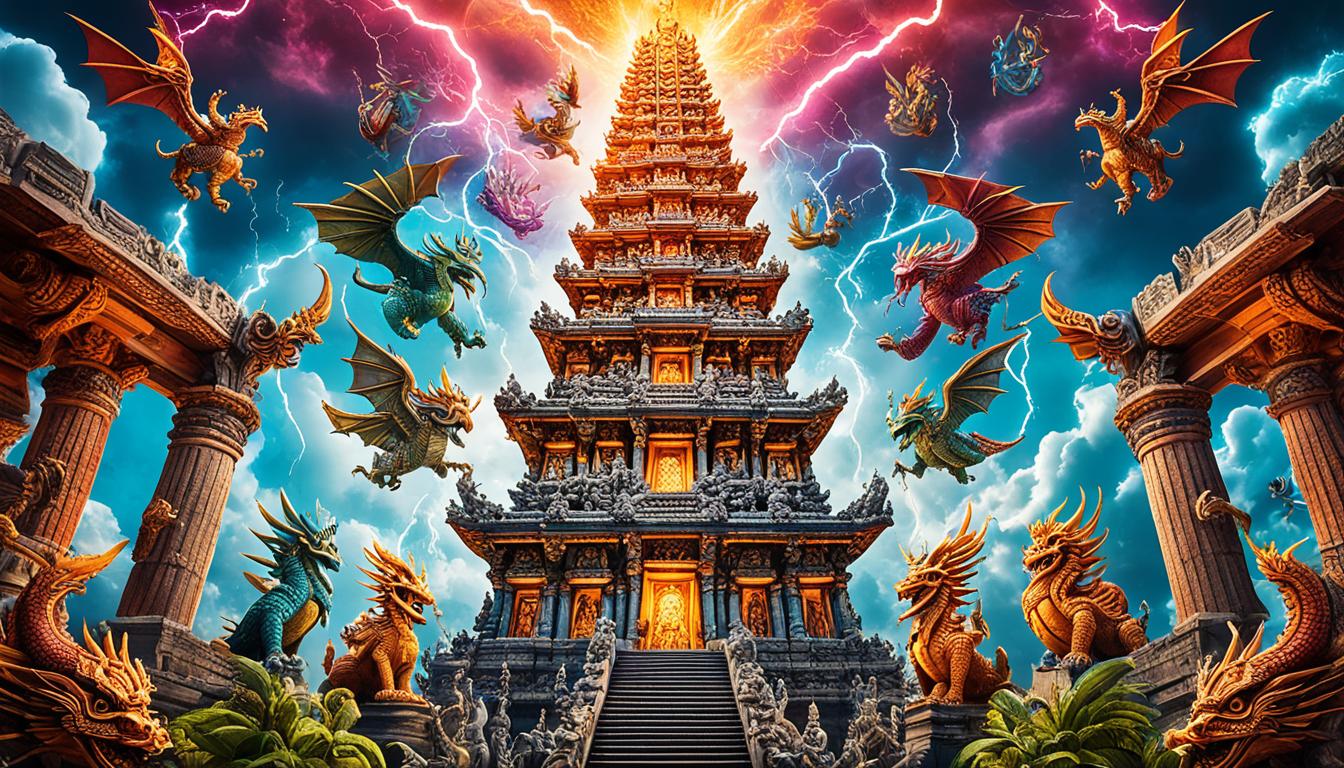
Mythology has captured human imagination for centuries. It tells stories of gods, heroes, and magical creatures. These stories come from ancient Greece, Norse, and Egyptian myths. They entertain and show us the beliefs and values of different cultures around the world.
Did you know “mythology” comes from Greek words? “Mythos” means “story or tale,” and “logos” means “word.” This shows how important stories are in understanding our world and our place in it. Myths helped ancient cultures explain mysteries, like the universe’s creation and the seasons.
Many mythological figures, like the Greek gods, were seen as both divine and human. This mix made them relatable and interesting to people back then. They could see themselves in the stories and feel connected to the characters’ feelings and relationships.
Today, mythology still influences our language and culture. Phrases like “Achilles’ heel” and references to Greek and Roman gods are common. These stories have shaped how we talk and think, making them a big part of our culture.
The Captivating World of Mythology
Mythology is a treasure trove of ancient wisdom and stories. It has captured human imagination for thousands of years. From ancient Greece to the Norse gods, these stories reveal the beliefs and values of their creators.
Uncovering Ancient Wisdom
Myths carry the collective wisdom of a culture, shared over generations. They let us peek into how our ancestors viewed the world. They helped them understand life, the human condition, and the forces of nature.
Myths as Cultural Mirrors
Myths are more than just stories. They reflect the unique views and traditions of their societies. They show us the gods and heroes of ancient Greece and the complex myths of other cultures. These stories highlight the shared experiences and values of humanity across time and places.
Exploring mythology helps us understand humanity’s search for meaning and connection with the divine. Whether you’re into ancient Greek tales or global mythologies, these stories still captivate and inspire us today.
Fun Facts About Greek Mythology
Greek mythology is full of legendary gods, goddesses, and mythical creatures. These stories have amazed people for centuries. From Mount Olympus to the Underworld, they still inspire us today. Let’s explore some surprising facts about these ancient legends.
Did you know Zeus, the top god, was once hidden in a cave as a baby? This was to keep him safe from his dad, Cronus, who ate his kids. Zeus grew up with nymphs and a magical goat named Amalthea, who fed him with goat’s milk and honey.

Hades, the god of the Underworld, wasn’t always seen as evil. He was often seen as fair and just, keeping the dead in order. Later, he became linked with the darker side of death.
The Minotaur, a mix of human and bull, lived in a maze on Crete. This creature was killed by Theseus, who used a thread to find his way out after defeating the Minotaur.
These stories show how deep and rich Greek mythology is. From gods and goddesses to mythical beasts, these tales still amaze and inspire us today.
Norse Mythology’s Intriguing Tales
Explore the world of Norse mythology, filled with legends that have wowed people for ages. These stories come from ancient Scandinavian cultures. They give us a peek into the lives of powerful gods and the epic stories that shaped the Nordic people’s culture and beliefs.
The Mighty Gods of Asgard
In Norse mythology, Asgard is the gods’ grand home. Odin, the All-Father, rules with his wise spear Gungnir. Thor, the thunder god, wields the mighty hammer Mjölnir. He protects Asgard and its people from chaos.
Loki, the trickster god, is always in the middle of the action. His clever tricks and nature add drama to the stories. These tales, from the world’s creation to the end of the gods in Ragnarök, show us the ancient Scandinavians’ beliefs and values.
Egyptian Mythology’s Enduring Legacy
The myths and legends of ancient Egypt have left a lasting impact on the world. They have influenced art, architecture, and culture for thousands of years. Egyptian mythology is filled with gods, goddesses, and pharaohs that still fascinate scholars and fans today.
At the core of this legacy are the mysterious Egyptian deities. Figures like the sun god Ra and the goddess Isis are key to understanding ancient Egyptian culture. Their stories, told through hieroglyphics, show the deep wisdom and beliefs of the time.
Pharaohs, Egypt’s divine rulers, were crucial to mythology. They were seen as gods on earth, with their lives and deaths part of Egyptian lore. Their tombs, filled with beautiful art and hieroglyphics, still amaze us today. They highlight the importance of these mythical leaders.
Today, Egyptian mythology’s symbols and images still capture our imagination. Symbols like the Sphinx and the ankh appear in art, architecture, and pop culture. They remind us of the lasting impact of ancient Egypt’s beliefs and traditions.
Fun Facts About Mythology
Mythology has been fascinating people for centuries. It tells stories of gods, heroes, and magical creatures. These stories show us the deep cultural traditions and themes that have lasted through time. Let’s dive into some surprising facts about mythology.
Did you know “pandora’s box” comes from Greek myths? Pandora was the first human woman made by the gods. She was given a box with all the world’s evils. Her curiosity made her open the box, letting all the evils out.
The “Trojan horse” story is also from Greek myths. In the Trojan War, the Greeks used a clever trick. They hid soldiers in a huge wooden horse, which the Trojans brought into their city. This led to the downfall of Troy.
Mythology still affects our culture today. The stars we see in the sky are named after mythological figures like Orion and Hercules. These stories still inspire us and spark our imagination.
Myths from ancient times still influence our stories, art, and culture. They show us the creativity, wisdom, and truths of humanity. By learning about these fun facts, we can appreciate the lasting impact of these stories.
Mythological Creatures: Fact or Fiction?
The world of mythology is full of amazing creatures that have caught our attention for centuries. From the big dragons of Chinese and European stories to the rare unicorns of Western tales, these creatures still fascinate us. We’ll look into why these mythical beasts are so interesting, their role in culture, and what they mean to us.
Dragons, Unicorns, and More
Dragons are known for their strength and fiery breath in myths. They are seen as both powerful protectors and scary monsters. In Chinese stories, dragons are kind guardians. But in European tales, they are often seen as fierce, guarding treasure.
The unicorn is a symbol of purity and beauty. Its single horn stands for seeking knowledge and spiritual growth. Alongside these creatures, the griffin, a mix of an eagle and a lion, is also well-known. It’s linked with bravery and was thought to protect treasures in ancient Greece and Rome.
Other creatures like the phoenix, a sign of new beginnings, and the Kraken, a huge sea monster from Scandinavian tales, also intrigue us. These beings, real or not, have stayed with us, becoming symbols and archetypes. They help us understand our world and the mysteries it holds.

The Power of Mythology in Literature
Mythology has always been a source of inspiration for writers and storytellers. It offers a deep well of characters, themes, and stories. These elements have become part of literary tradition.
Stories from mythology have been captivating for centuries. They let us explore the human condition and complex themes. Tales like Orpheus and Eurydice, Odysseus, and the Norse gods have inspired many authors.
Mythology in literature is a powerful way to tell stories. It lets writers explore themes like love, loss, redemption, and the search for meaning. The archetypes and structures of these tales offer a rich source of inspiration.
From Homer’s epics to modern retellings by authors like Margaret Atwood, Neil Gaiman, and Rick Riordan, mythology’s impact is clear. It helps writers explore the human experience and challenge our views. This leads to works that make a lasting mark on literature.
Myths and Legends: A Global Tapestry
Mythology is a global phenomenon, found in cultures worldwide. Each has its own stories, belief systems, and mythical creatures. From ancient Greece to the Amazon’s indigenous tribes, these tales share universal themes. They show how storytelling can bridge gaps and build understanding.
Exploring Cultural Diversity
The stories of Thor, the Japanese kitsune, and the Navajo creation myths show us the world’s diversity. They let us peek into different cultures and values. By diving into these stories, we learn about the universal themes that connect us all. This helps us make cross-cultural connections that spark curiosity and wonder.
Chinese dragons and European unicorns are just a few of the mythological creatures that fill these tales. They symbolize the natural world, the divine, and human mysteries. By exploring these fantastical beings, we discover deep truths about our place in the universe. We learn about our bond with nature and the power of our imagination.