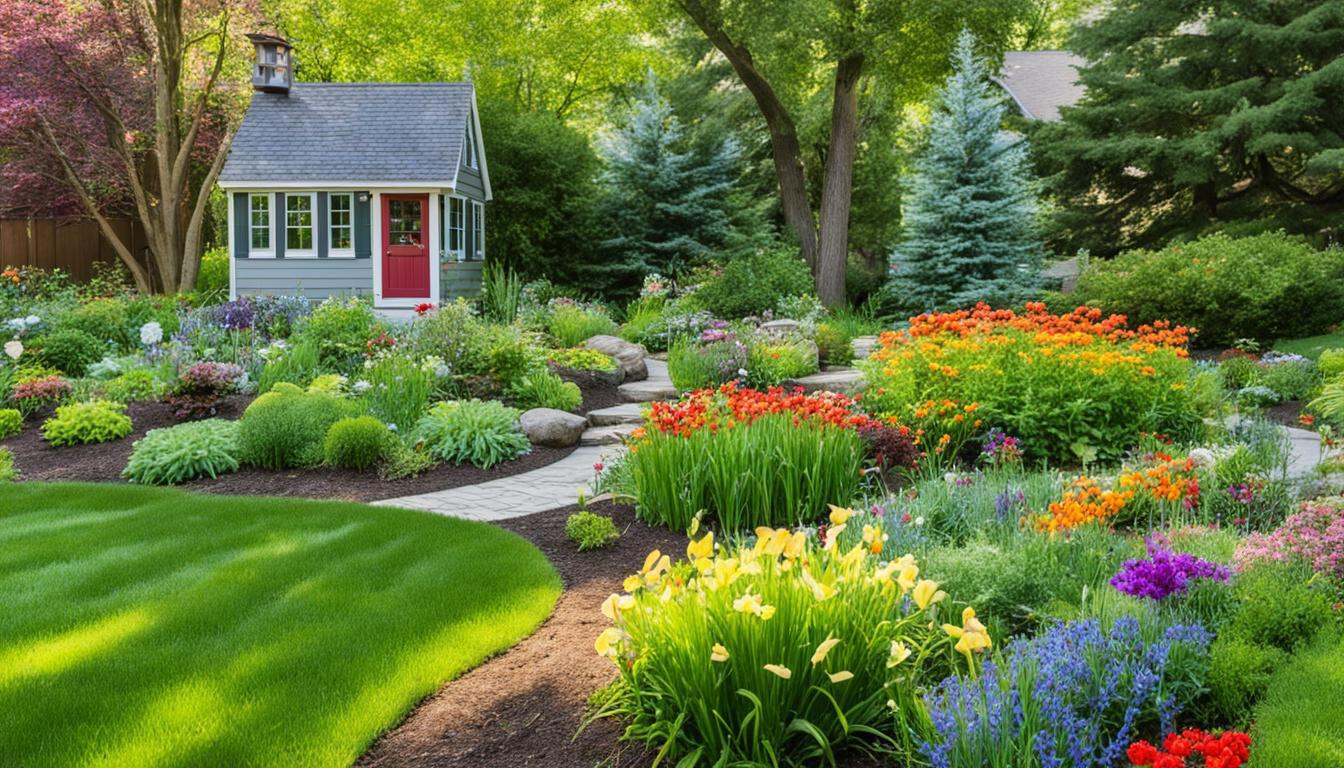
Do you dream of turning your backyard into a haven for local wildlife and deepening your bond with nature? This guide is here to help. It will show you how to make a backyard habitat that’s both lovely and helpful. No matter the size of your yard, you can create a space that draws in birds, butterflies, small mammals, and beneficial insects.
Learn how to use native plants, offer food, add water, and create shelter and nesting spots. These easy steps will help you support local wildlife and improve your health. You’ll also get to enjoy the beauty of nature right in your own yard!
Unleash the Beauty of Nature in Your Own Backyard
Turning your backyard into a thriving habitat is rewarding for you and local wildlife. It helps support urban biodiversity and aids in environmental conservation. By doing this, you play a key role in keeping nature balanced.
Why Creating a Backyard Habitat Matters
In today’s world, backyard habitats are crucial. As natural areas shrink, your yard can become a safe space for local species. It offers them food, water, and shelter. This small effort supports the complex life web in your community.
Benefits for Local Wildlife and Your Well-being
Creating a backyard habitat helps local wildlife and boosts your health. Studies show nature can reduce stress, lower anxiety, and improve mood and thinking. Enjoying nature’s beauty in your own yard can make you feel calm and connected.
It also brings birds, butterflies, and other creatures to your yard. This lets you watch nature up close. Seeing nature’s cycles in your yard can make you feel refreshed and more connected to the earth.
Assessing Your Backyard: A Habitat Checklist
Creating a backyard haven for local wildlife begins with a detailed look at your outdoor area. By assessing your backyard, you can spot areas that already help wildlife and see where you can improve. This checklist will help you check your landscape and habitat for wildlife.
Start by examining your backyard’s elements. Think about the types of plants, water sources, and places for shelter and nesting. Check if your landscape meets the needs of birds, butterflies, and other local animals.
Notice the wildlife-friendly features you already have. Look for native plants that draw in pollinators, bird feeders, and birdbaths, and spots like dense shrubs or brush piles for hiding. These can be the base of your backyard habitat.
Find any issues that might upset the ecosystem balance. This could be invasive plants, missing water, or too many pesticides or herbicides. Fixing these problems makes your backyard a better place for wildlife.
Use this assessment to plan for your backyard’s future. With a clear view of what you have, you can start adding more features that help wildlife. This way, you can make your backyard a great place for nature.
Designing Your Backyard Habitat
Turning your backyard into a lively backyard habitat is a fun project. It makes your outdoor area more beautiful and helps local wildlife. The key is choosing the right native plants. These plants are perfect for wildlife-friendly landscaping and boosting biodiversity enhancement.
Incorporating Native Plants for Local Species
Native plants are essential for a great backyard habitat design. They grow well with the local wildlife because they’re made for the area’s weather, soil, and plants. Adding different native plants makes your yard a haven for birds, butterflies, and other helpful animals.
When picking native plants, think about how much sun they need, the soil type, and how much water they want. Mix flowers, shrubs, and trees that offer food, shelter, and places to nest for wildlife. This will make your yard look great and help the environment.

A good backyard habitat changes and grows over time. Be ready to change and care for your plants. This way, your yard will keep supporting the wildlife you want to help and watch.
Providing Food Sources for Backyard Wildlife
Creating a great backyard for wildlife is more than just offering shelter and water. It’s key to provide lots of food too. By setting up bird feeders and growing butterfly gardens, you can meet the food needs of many species.
Bird Feeders: A Magnet for Feathered Friends
Bird feeders can make your backyard a busy place for birds. Fill them with seeds, suet, and treats to draw in many bird types. Adding native plants like berries and flowers gives birds a natural way to eat.
Butterfly Gardens: Cultivating Nectar-Rich Bliss
Butterflies are beautiful and important for pollination. Planting a butterfly garden with nectar plants makes it a feast for them. Use plants like milkweed, coneflowers, and lantana for a steady food supply.
To support many types of wildlife, copy their natural habitats. Use native plants for food to make your yard beautiful and helpful for wildlife.
Water Features: A Vital Element for Backyard Habitats
Creating a backyard habitat is more than just planting native plants. Adding water features is key to attracting wildlife. It’s a big help for local species.
Birdbaths make your backyard a lively spot. They let birds bathe, drink, and hang out. Put one near shrubs or trees for more birds to visit.
If you have more space, think about a small pond. Ponds are great for birds and other aquatic life. Add native plants and make sure it’s easy for wildlife to get in.
Water dishes or shallow bowls can also be helpful. Place them around your yard for animals like butterflies and rabbits. This way, they always have water nearby.
Adding water features is a big step in making your backyard a wildlife oasis. It brings many species to your yard, making it a lively place.
Creating Shelter and Nesting Sites
Creating safe shelter is key to drawing various wildlife to your backyard. By adding birdhouses, brush piles, and natural spots, you make a great place for birds, animals, and insects. This helps bring the creatures you want to your outdoor space.
Birdhouses: A Home for Our Feathered Friends
Putting up birdhouses is a great way to give birds a place to nest in your backyard. Make sure to pick birdhouses that fit the birds you want to attract. They should have the right hole size, inside space, and spot in your garden.
Place these birdhouses near your plants and other wildlife spots to make them more inviting.
Brush Piles: A Cozy Retreat for Small Creatures
Collect fallen branches and leaves to make brush piles in hidden spots. These piles are perfect for small animals, reptiles, amphibians, insects, and more. They need places to hide and nest.
Stack the materials to make different levels and ways in. This lets wildlife find safe spots to live and hide in the brush pile.
Natural Hideaways: Embracing the Wild
Don’t forget about natural spots in your backyard. Leave some leaves or logs alone to become homes for many creatures. You can also make a brush or rock pile to look like nature’s own shelter.
Adding these shelters and nesting spots makes your backyard a great place for wildlife. It also makes your outdoor area more beautiful.

Sustainable Gardening Practices for Your Backyard Habitat
Creating a backyard habitat is rewarding. Sustainable gardening is key to its health and beauty. By using eco-friendly methods, you help a diverse ecosystem grow while reducing harm to the environment.
Organic lawn care is central to sustainable gardening. Say no to harsh chemicals and choose natural ways to fight pests. This keeps your garden safe for wildlife and you. Use organic fertilizers and gentle pest control to keep your lawn green and welcoming.
Using native plants is also crucial. These plants are tough and fit your local climate. They offer food and shelter for local wildlife. By picking these plants, you make your garden a true reflection of nature.
Sustainable gardening is about what you do and what you avoid. Avoid harsh chemicals and synthetic fertilizers. Choose organic and natural options that work with nature. This way, you’ll have a garden that’s full of life and brings joy to your family.
Nature Tips: Attracting Pollinators to Your Backyard Oasis
Creating a backyard that draws bees, butterflies, and hummingbirds is rewarding. It helps local wildlife and lets you enjoy nature’s beauty. Use native plants and smart design to make your space a pollinator paradise.
Pollinators are key to many plants’ survival. But, they’re disappearing due to lost habitats and pesticides. By inviting them to your yard, you help these vital creatures and enjoy their beauty.
Planting native flowers, shrubs, and trees is a great way to attract pollinators. These plants fit the local climate and soil, giving pollinators what they need. Choose plants that bloom at different times for a steady food supply.
Don’t forget to add features like a shallow birdbath or small water feature for pollinators. Use organic gardening methods instead of harsh pesticides. Also, include places like log piles or dense plants for nesting and shelter.
With these easy steps, your backyard can become a lively pollinator spot. Watch as bees, butterflies, and hummingbirds visit your garden. They’ll help make your outdoor space healthier and more beautiful.
Engaging the Whole Family in Backyard Habitat Creation
Fun Activities and Educational Opportunities
Creating a backyard habitat is a great way to bond with your family and love nature more. Let everyone help from planning to keeping the habitat up. Kids and adults will enjoy the fun activities and learn a lot from this project.
Begin by letting the whole family pick native plants that attract wildlife. Have your kids look up the plants they like and play a game to spot birds, butterflies, and other visitors. Set up a bird-watching spot or a butterfly garden. Watch as your kids learn about the amazing animals that come to your yard.
Building birdhouses and creating brush piles are great ways to work together. These projects make your yard look better and help local wildlife. Let your kids help build and learn why these things are important for nature.