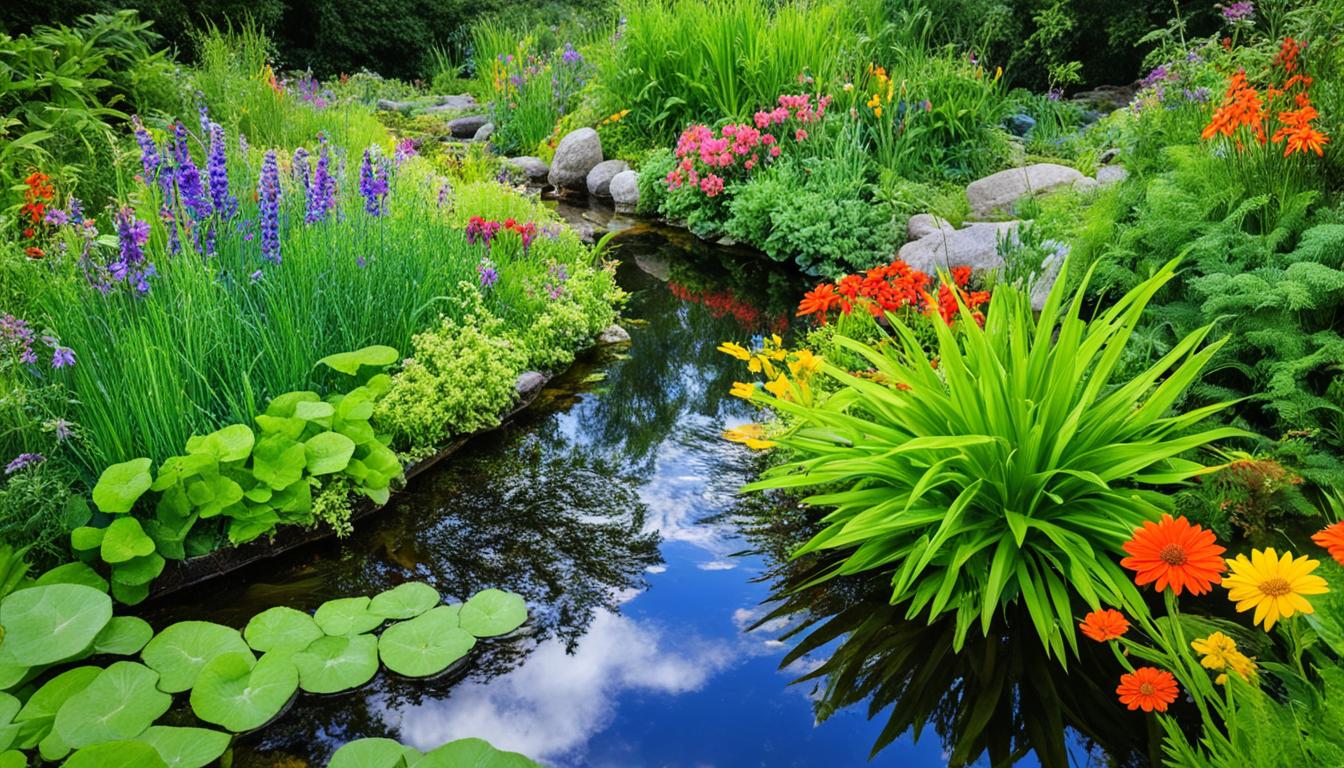
Learn how to make a beautiful and eco-friendly rain garden for your yard. Rain gardens help manage stormwater runoff, save water, and attract wildlife. We’ll guide you through designing, building, and keeping a rain garden that helps your property and the planet.
Rain gardens fit any yard size or budget. With these easy steps, you can make a rain garden that looks great and helps with stormwater and water conservation. Turn your yard into a lush, water-saving oasis that welcomes beneficial insects, birds, and other wildlife!
What is a Rain Garden?
A rain garden is a landscaped area that catches and filters stormwater from hard surfaces like roofs and driveways. It’s a special spot that holds water and lets it slowly soak into the ground. This helps reduce pollutants in local waterways. Rain gardens are key in managing stormwater and saving water.
Understanding the Purpose of Rain Gardens
Rain gardens aim to stop stormwater runoff from polluting nearby water. They catch the runoff and let it slowly soak into the ground. This action recharges groundwater and keeps harmful substances out of water bodies.
Benefits of Rain Gardens for Your Landscape
Rain gardens are great for homeowners and the environment. They prevent flooding, recharge groundwater, and support local wildlife by attracting native plants and animals. They also help save water by using stormwater for plants instead of tap water.
Adding a rain garden to your yard helps local ecosystems and supports sustainable stormwater management. It’s a beautiful and useful addition to any outdoor space, big or small.
Choosing the Perfect Location
Finding the right spot for your rain garden is key to its success. You need to think about several important factors. These will make sure your rain garden works well and looks good in your yard.
Factors to Consider When Selecting a Site
First, look at the land’s slope. Rain gardens do best on gentle slopes. This setup helps with drainage and catching runoff from hard surfaces like roofs and driveways. Aim for a slope between 1% and 12% to prevent water from staying put.
Also, think about how much sun the spot gets. Rain gardens need partial to full sun for the plants to grow well. Picking a spot with the right amount of sunlight makes your garden look great and work right.
Last, check the soil’s condition. Rain gardens need soil that drains well to handle lots of rain. By looking at the soil’s type and how it lets water through, you can pick a spot where water can soak into the ground. This avoids standing water.
Designing Your Rain Garden
Designing your rain garden is key to making it both useful and pretty. You need to think about its size, shape, and depth. These should match your property and the runoff you want to handle.
The garden’s size depends on how much water it must hold. Aim for a size that can catch the first inch of rain from your roof, driveway, or patio. This way, it can handle most rainfall without overflowing.
The shape of your rain garden matters too. A shallow, bowl-like design with gentle slopes helps water soak in slowly. It also makes the garden look good, blending well with the rest of your landscape.
The depth of the garden is also vital. Aim for 4 to 8 inches deep for good water storage and slow infiltration. Deeper gardens work best in heavy clay soils or areas with high water tables. Shallower gardens are better for sandy soils.
By thinking about the size, shape, and depth of your rain garden, you can make a feature that’s both useful and beautiful. It will help manage stormwater runoff and enhance your landscape’s value.
Preparing the Site
Before you start planting your rain garden, make sure to prepare the site first. Test the soil and add any needed changes. Knowing the soil’s type, texture, and how well it absorbs water is key. If the soil is hard or doesn’t drain well, you might need to add special soil mix-ins.
Soil Testing and Amendments
Start by testing the soil to see its pH level, nutrient levels, and texture. This info helps you pick the best soil mix for your rain garden plants. If the soil is dense and doesn’t absorb water well, think about adding compost or peat moss. These can help with drainage and keeping water in the soil.
After figuring out what your soil needs, it’s time to act. Use a rototiller or garden fork to loosen the top 6-8 inches of soil. This breaks up any hard spots. Then, mix in the soil changes you need for a great rain garden. This is important for good stormwater absorption and plant health.

A successful rain garden needs soil that drains well and absorbs stormwater fast. By preparing the site right, you’re setting up for a lush, healthy rain garden. This will help your landscape and the environment too.
Selecting Plants for Your Rain Garden
Starting a rain garden means picking the right plants. It’s key to choose native species that fit your local climate and soil. These plants do well in the wet and dry cycles of a rain garden. They also help local wildlife, like pollinators.
Native plants are crucial for a rain garden’s success. They’re made to handle the changing moisture levels. By picking drought-tolerant and pollinator-friendly natives, you get a garden that’s easy to care for and supports local life.
The Advantages of Native Plants
Native plants bring many benefits to your rain garden. They need less care and water because they’re suited to your area. This means you’ll spend less time and resources on your garden, letting you enjoy its beauty and benefits.
Also, native plants are stronger against pests and diseases, cutting down on chemicals. They offer food and shelter for bees, butterflies, and hummingbirds. This helps your local ecosystem and increases your garden’s biodiversity.
Planting and Mulching
Creating a thriving rain garden needs careful planning in planting and mulching. The way you arrange plants and use organic mulch is key. These steps help make a landscape feature that’s healthy and lasts a long time.
When planting, think about how big the plants will get and how they grow. Arrange them in a way that looks good and lets air flow well. Make sure plants have enough space to grow without getting too close to each other.
After planting, add organic mulch. Put a 2-4 inch layer of mulch around the plants, but don’t cover the stems or crowns. Mulch keeps the soil moist, stops weeds, and protects it from erosion and compaction.
By using these planting and mulching tips, you can make a rain garden that looks great and manages stormwater well. It will make your landscape more beautiful.
Maintaining Your Rain Garden
Keeping your rain garden in top shape is key to its success. With a little time and effort, your rain garden will keep working well and look great for years.
Watering and Weeding Tips
Watering your rain garden regularly, especially in the first year, is vital. Give your plants about 1-2 inches of water each week to help them grow deep roots. Watch the weather and adjust how often you water.
Weeding is also important to keep your rain garden healthy. Spend a few minutes each week pulling weeds by hand. Make sure to remove the roots to stop them from coming back. As your plants grow, they will crowd out weeds, making weeding easier.
Don’t forget to prune or divide plants when needed to keep them looking good. Add new mulch every year to keep the soil moist and stop weeds. These steps will help your rain garden stay beautiful and functional for a long time.
Nature Tips: Attracting Wildlife to Your Rain Garden
A well-designed rain garden is a haven for wildlife, drawing in birds, butterflies, and pollinators. By using native plants, you create a home that boosts your area’s biodiversity. These plants offer food and shelter, making your garden a thriving habitat.
To attract rain garden wildlife, focus on native plants. They’re perfect for the local climate and soil, supporting pollinators and bird habitat. Mixing flowers, shrubs, and trees creates a layered landscape that feeds resources all season long.

Watch which species visit your rain garden and add more plants or features to help them. A shallow bird bath or a small log pile can offer water and shelter. By doing this, you make your garden more beautiful and help the environment.
Dealing with Common Rain Garden Issues
Rain gardens are usually easy to take care of. But, you might face some common challenges. Keeping an eye on these issues and fixing them quickly will help your rain garden thrive.
Troubleshooting Drainage and Erosion Problems
Poor drainage is a common issue in rain gardens. If water stays or takes too long to soak in, your garden might need a shape or depth change. Adding more mulch or rocks can also help with drainage and stop erosion.
Too much erosion can happen in rain gardens. It might be due to the slope, soil type, or how water flows. Changing the garden’s shape, adding more mulch, or placing rocks and plants right can help stop erosion and keep the garden working well.
If some plants in your rain garden are not doing well, check the soil and sunlight they get. Fixing the soil or moving plants to a better spot can often fix these problems.
By keeping an eye on rain garden problems, drainage issues, erosion, plant health, and maintenance concerns, you can keep your rain garden working great. It will continue to offer the many benefits it was made for.
Rain Garden Ideas and Inspiration
When making your rain garden, think about adding design elements for looks and function. Paths, seats, or special spots can make your garden more interesting. Try different plants, shapes, and sizes to make it your own.
Looking at various sources can spark new ideas for your rain garden. Check out online galleries, landscape magazines, or visit parks and gardens. Notice how plants, paths, and water are used in designs. Mix these ideas with your own style to make your garden stand out.
Don’t hesitate to be creative with your garden. Add fun paths, winding streams, or a cozy spot to sit. Sustainable landscaping offers endless possibilities. Your rain garden can show off your style and care for the environment.
Incorporating Rain Gardens into Your Landscape Design
Rain gardens can fit right into your landscape, adding both beauty and function. They work well with your overall design, making your outdoor space look better and be more eco-friendly.
Think about how a rain garden can match your yard’s look, like with trees, shrubs, and flowers. A rain garden can be a key part of your green landscaping, mixing well with other water-wise features.
A rain garden is great for more than just holding water. It can be a main attraction or add beauty to your yard. It helps with stormwater and is a home for wildlife, making it a smart choice for your landscape.
Adding a rain garden to your landscape shows you care about the planet. It looks good and is easy to keep up. This approach makes your property more attractive and helps your local environment thrive.
Rain Garden Resources and Further Reading
If you want to learn more about rain gardens, there are many online guides and local programs. Talking to landscape designers, horticulturists, or your local extension office can help. They offer valuable insights and support for planning, building, and keeping up your rain garden.
Check out these rain garden resources, gardening guides, and learn about stormwater management and sustainable landscaping. These can deepen your knowledge and inspire you to create a great rain garden for your home.
These resources offer step-by-step instructions and design ideas. They can help you understand rain gardens better and make sure your project goes well. Whether you’re new to gardening or have been doing it for years, there’s plenty of information to help you create a beautiful and green rain garden.