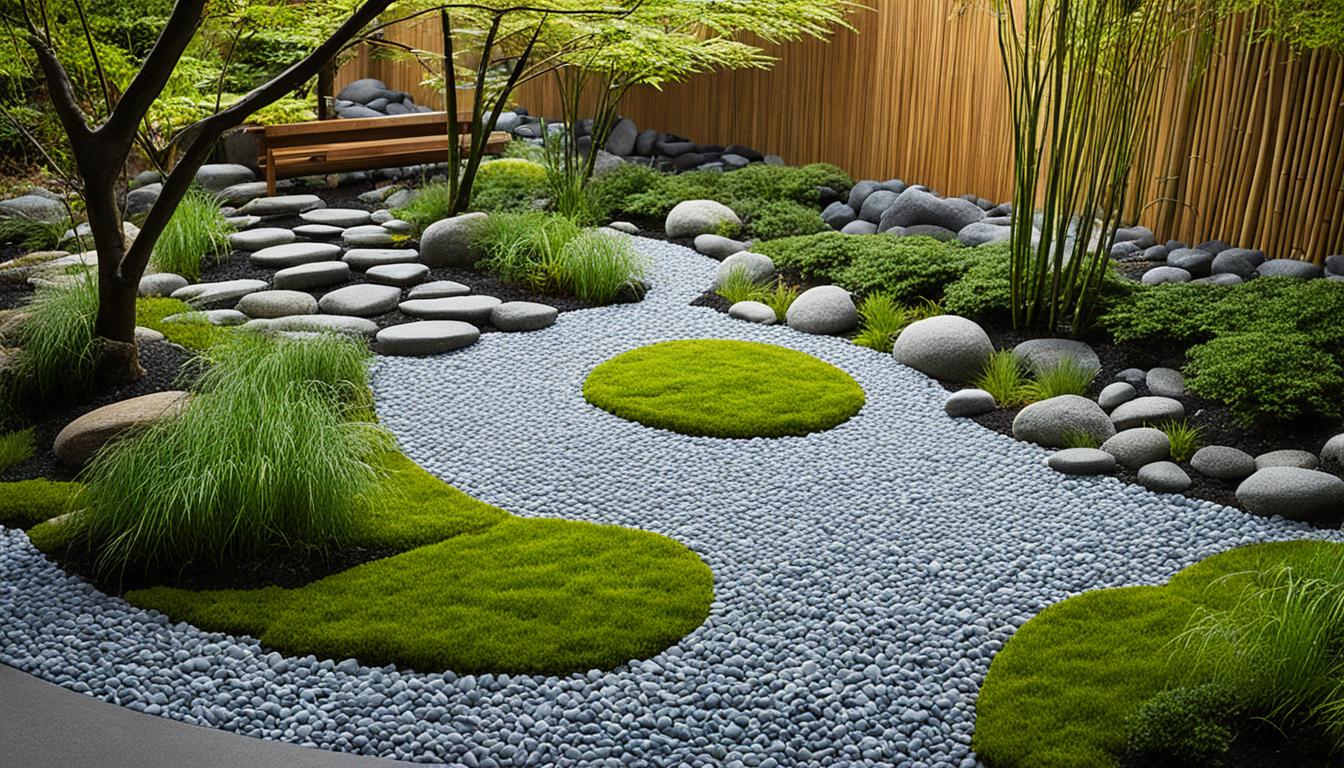
Get ready for a journey into creating a serene Zen garden in your outdoor space. This guide is perfect for anyone, whether you have a big backyard or a small patio. We’ll show you how to make your space a peaceful place for relaxation and meditation.
Learn about the key elements of Zen garden design. Discover how to add mindfulness to your garden. And find out how to make your outdoor space both beautiful and peaceful. You’ll be able to create your own zen garden, a place to escape the busy world and enjoy nature’s beauty.
Discovering the Art of Zen Gardening
Creating a zen garden is more than just landscaping. It’s a deep dive into simplicity, balance, and harmony with nature. This is the core of Zen philosophy. By grasping the basics of zen garden design, you can make a peaceful outdoor space. This space will mix minimalist beauty with nature’s own beauty.
Understanding the Principles of Zen Garden Design
A zen garden celebrates the simplicity of nature. It has raked gravel, rocks, and a few, chosen plants. These elements bring peace and mindfulness. This simple style lets nature’s beauty stand out, making visitors pause, notice, and connect with the area.
Embracing Minimalism and Simplicity
The zen look values the strength of simplicity, urging you to drop clutter and see the beauty of few things. By picking each element in your zen garden, you make a calm place that touches the senses and calms the soul. Features like a raked gravel path or a pruned bonsai tree let nature be the main focus. This inspires calm and thought.
Choosing the Perfect Location for Your Zen Garden
Finding the right spot for a Zen garden is key. It should be a peaceful place that lets you connect with nature. The right location makes the Zen garden part of your backyard design.
Think about sunlight when picking a spot. Choose a place that gets lots of sunlight for a warm feel. Stay away from shady areas that don’t have enough light and shadow for a Zen garden.
Privacy is important too. Find a quiet spot away from busy areas or unwanted views. This creates a peaceful escape. Use plants or hedges to make it feel more private.
Think about how your Zen garden fits with your backyard. Make sure it looks good with the rest of your landscape. This way, your Zen garden will look like it belongs and make your outdoor space more beautiful.
Essential Elements of a Zen Garden
Creating a Zen garden means picking and placing its key parts with care. At its core are natural materials that bring peace and balance. Let’s see how to use rocks, gravel, and water to make a Zen garden.
Incorporating Rocks and Gravel
Rocks and gravel are key to a Zen garden, showing strength and balance. Choosing the right stones, smooth or rough, helps create a peaceful look. Adding gravel can make it seem like water is flowing, encouraging visitors to think deeply.
The Significance of Water Features
Water is very important in Zen gardens. It can be a calm pond, a small stream, or a simple basin. These water elements make a soothing sound and draw the eye. They help visitors relax and connect with nature.
With rocks, gravel, and water, you can make a peaceful place. This space encourages deep thought and a love for nature’s beauty.

Creating Pathways and Boundaries
Creating a Zen garden means thinking carefully about the paths and boundaries. These paths guide visitors on a calm journey. They are key to the garden’s peaceful feel and flow.
Designing Harmonious Walkways
Design your Zen garden paths with balance and simplicity in mind. Choose paths that wind gently, encouraging a slow, thoughtful walk. Use natural materials like stepping stones or smooth rocks for a nice touch and look.
The paths should be wide enough for one person only. This makes the space feel more intimate and connected to nature.
Use landscaping like pruned shrubs or rocks to mark the paths. This makes the garden look better and helps guide visitors. It encourages them to stop and enjoy the calm.
Setting clear boundaries in your Zen garden is key. It makes the space feel private and enclosed. Use things like bamboo fencing or stone walls to mark the garden’s edges.
These boundaries make the garden feel like a true retreat. They let you fully enjoy the peacefulness of your Zen garden.
Nature Tips: Integrating Natural Elements
Creating a Zen garden means embracing nature and blending natural elements into your space. Use stone, wood, and water to make a peaceful and beautiful area. This space should reflect the Zen philosophy.
Natural stones are key in a Zen garden. They bring a sense of stability and grounding. Boulders and rocks can be the main focus. Pebbles and gravel can look like a stream or pond, adding balance and harmony.
Adding natural wood, like weathered logs, brings a rustic feel. Use it for benches, bridges, or simple structures. These elements blend well with the landscape, enhancing the Zen feeling.
Water features like koi ponds or small waterfalls are vital. They add calming sounds and sights. This makes your Zen garden more peaceful and balanced.
Selecting and Arranging Plants
Creating a Zen garden is all about choosing and placing plants wisely. The beauty of Zen gardening is in letting plants blend with the landscape naturally. Evergreens and bonsai trees can turn your garden into a peaceful retreat.
Incorporating Evergreens and Bonsai
Evergreens like Japanese maples, junipers, and pines are key in Zen gardens. They stay green all year, adding stability and balance. Bonsai trees add mystery with their small size and detailed branches. They make you want to look closer and think deeper.
Think about the shapes, textures, and colors when arranging plants. Pairing a tall evergreen with a small bonsai creates a beautiful contrast. This reflects Zen philosophy. Leave some empty space to make the garden feel peaceful and guide the viewer’s gaze.

Zen gardening is about how plants work together in the garden. By picking and placing your plants thoughtfully, you create a peaceful spot for reflection and soul nourishment.
Achieving Balance and Harmony
Creating a Zen garden is about finding balance among its elements. Balance and harmony are key in Zen garden design. They guide how rocks, water, plants, and other parts come together. Mastering this balance is key to making a space truly Zen.
A well-designed Zen garden has harmony. Each part should complement the others. This is done with shapes, textures, and colors. By arranging elements thoughtfully, you make a garden that feels calm and balanced.
Asymmetry is a key design principle in Zen gardens. They don’t follow perfect symmetry. Instead, they use asymmetry to add interest and spontaneity. This is seen in how rocks, plants, and water features are placed, creating a natural look.
Using balance and harmony, you can make your Zen garden a peaceful oasis. With careful planning and Zen design, you create a space for reflection and calm. It invites visitors to pause and enjoy the beauty of nature.
Incorporating Zen Garden Accessories
Creating a Zen garden is more than just placing rocks, gravel, and plants. Adding Zen-inspired accessories can make your outdoor space more beautiful and functional. Items like lanterns and statues can bring elegance and peace to your garden.
Choosing Lanterns and Statues
Lanterns are a great choice for a Zen garden. They add a warm glow and light the way for visitors. Choose lanterns that match your garden’s look, like stone or bamboo ones. Place them where they light up important areas or add mystery.
Statues and figurines can also be meaningful in a Zen garden. Find ones that show Zen principles, like Buddhist figures or natural elements. Put them in places where they look good and encourage people to think deeply.
When adding accessories, keep things simple and balanced. Don’t fill your garden with too many items. Each piece should have a special role in making your garden peaceful and beautiful.
Maintaining Your Zen Garden
Keeping your zen garden peaceful and balanced needs regular care. Tasks like raking gravel and trimming plants are key. They help keep your outdoor space a calm place for rest and meditation.
Techniques for Raking and Pruning
Raking gravel in your zen garden is a way to meditate. Use a strong rake to make patterns in the gravel. This makes your garden look clean and peaceful.
Pruning plants is also important. Trim any plants that are getting too big. This keeps your garden looking neat and in line with its design. Evergreens and bonsai trees might need more trimming to keep their shape.
Spending time on raking, pruning, and other upkeep tasks keeps your zen garden special. Embrace the zen way of caring for your garden. Enjoy the calmness it brings and the beauty of a well-kept space.
Creating a Personal Meditation Space
Creating a special spot for meditation in your Zen garden can change your life. It lets you dive deep into calming and healing. By setting aside a space just for thinking and being mindful, you can fully enjoy the peacefulness of your garden.
When designing your meditation spot, think about adding natural things like rocks or a small water feature. These can make the area feel more zen. Adding a comfy seat, like a cushion or a low bench, makes it easier to sit and meditate.
To make the best personal space in your Zen garden, keep it quiet and peaceful. Use plants or screens to make it private. This way, you can focus on the now and connect more with nature.
Keep your meditation area simple and uncluttered. Choose a few things that help you relax and think deeply. With a special spot in your Zen garden, you’ll find new ways to heal and refresh yourself.
Embracing the Zen Mindset
A Zen garden connects us deeply with nature and brings inner peace. To enjoy your outdoor space fully, you need a Zen mindset. This mindset values mindfulness, simplicity, and harmony. By living by Zen philosophy, you can experience a change that goes beyond just being in nature.
Mindfulness is key to the Zen mindset. When you’re in your Zen garden, take your time and really notice everything around you. Feel the roughness of the rocks, hear the leaves rustle, and listen to the water. This way, you’ll feel closer to nature and more at peace inside.
Simplicity is also crucial in a Zen garden. Don’t fill your garden with too many things. Aim for a balance where every part has a special meaning. Following the “less is more” idea, you’ll create a place for quiet thought, rest, and enjoying nature’s beauty.