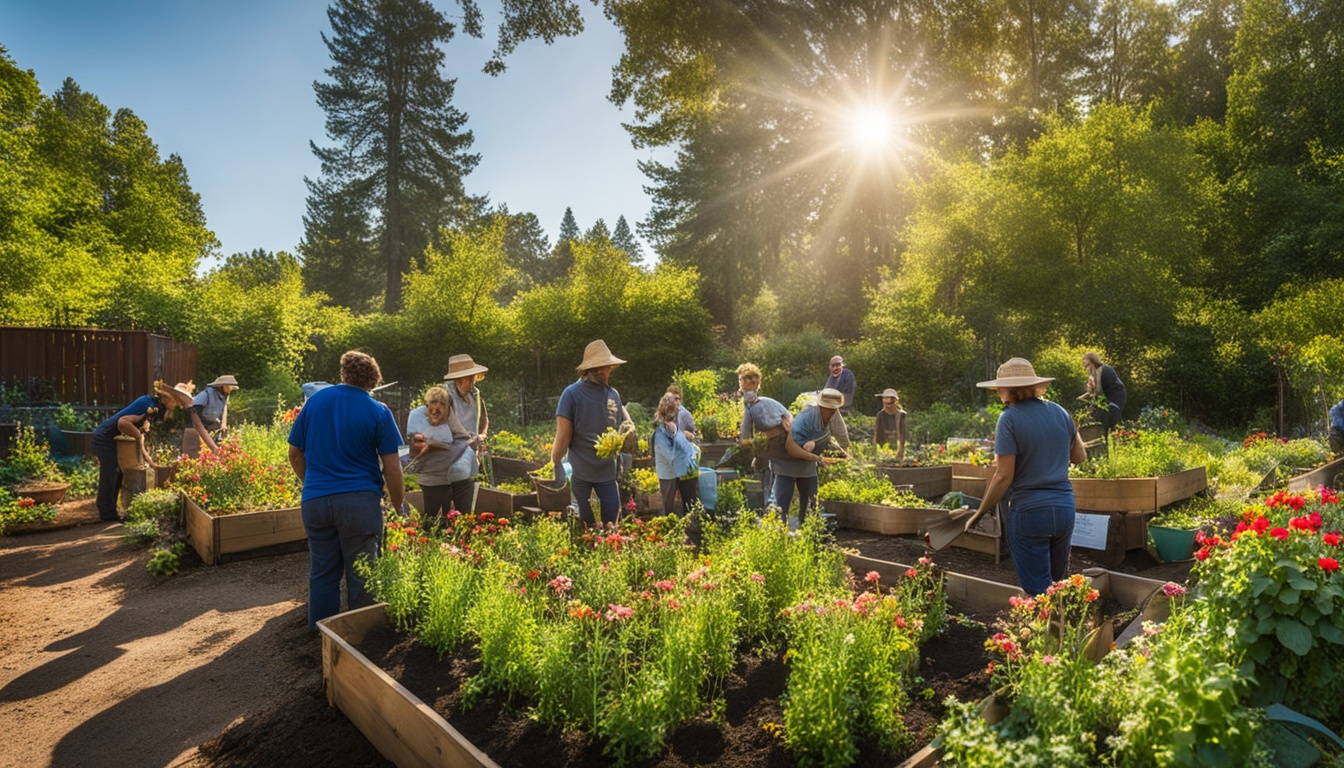
Imagine a vibrant, thriving green space in your neighborhood’s heart. Here, people grow fresh produce, build community, and live sustainably. Starting a community garden makes this dream come true. This guide is for everyone, from experts to beginners, to help you begin a successful garden in your area.
Community gardens are places where people grow plants, veggies, and herbs together. They offer fresh food, social spots, outdoor fun, and learning about nature. By starting one, you connect your neighborhood and boost everyone’s health and happiness.
This article will show you why community gardens are great. We’ll help you plan and prepare, and give tips for success. Get ready to create a green space that your community will love.
What is a Community Garden?
A community garden is a place where people work together to grow plants, vegetables, fruits, and herbs. These gardens are often found in cities or suburbs, where many people don’t have much green space at home. They let people connect with nature, grow their own food, and build stronger community ties.
Defining a Community Garden
A community garden is a project where a group or an organization takes care of a shared piece of land. These gardens can be small backyard plots or big urban gardens. What makes them special is that everyone involved works together to plan, plant, and look after the garden.
Benefits of Community Gardening
Community gardens are great for both individuals and the community. They let people grow their own food, which means they can eat fresh, healthy meals. Gardening also gets people moving, helps their mental health, and brings the community closer together. Plus, these gardens are good for the planet by cutting down on food transportation and helping local wildlife.
Planning Your Community Garden
Starting a community garden is thrilling, but it needs careful planning. First, find a good spot for your garden. This choice is key to your garden’s success and lasting impact.
Finding a Suitable Location
Look for a spot with plenty of sunlight, water, and good soil. Your garden should get at least 6 hours of sunlight daily. Also, make sure there’s a steady water supply for watering.
Getting the right land is crucial. You might need to work with local groups or landowners for permission. Be ready for any legal or administrative challenges.
Gathering Community Support
A community garden thrives with community support. Talk to neighbors, groups, and leaders to see if they’re interested. Use meetings or events to share your idea and get people involved.
Finding volunteers is key for garden upkeep. Look for people who love gardening, being green, or building community. Give them roles to share the work and make everyone feel part of the team.
Choosing the right spot and building a strong community team sets you up for a successful garden. It will bring people together and turn unused spaces into lively green areas.
Preparing the Garden Site
Turning a piece of land into a community garden takes careful planning. First, check the site’s condition to make sure it’s good for growing things. Look at the soil, how much sun it gets, and what plants are already there.

Testing the soil is key to getting started. It tells you about the soil’s pH, nutrient levels, and texture. With this info, gardeners can pick the best plants and plan for a great growing season.
After checking the soil, clean the area of debris, weeds, or overgrowth. This might mean pulling weeds by hand or using tools to till the soil. Getting the garden beds ready for plants is important for their health and growth.
Don’t forget about making the garden easy to get around in. Think about where to put water sources, tool storage, and paths. Planning for these things makes the garden useful and welcoming for everyone.
Nature Tips: Choosing the Right Plants
Starting a community garden means picking the right plants is key. You want plants that do well in your area and fit what your community likes. By picking the right vegetables and herbs, you make a garden that’s full of life and gives back to your neighborhood.
Consider Your Climate
Before picking plants, look at your local climate. Check the average temperatures, how much rain you get, and what your soil is like. This helps you pick plants that will grow well. Choosing the right plants means you’re more likely to have a good harvest and won’t need to spend a lot of time taking care of them.
Selecting Vegetables and Herbs
Think about what your community likes to eat when choosing vegetables and herbs. Things like tomatoes, bell peppers, zucchini, and leafy greens are usually popular. Adding herbs like basil, parsley, and thyme makes the garden look and smell great.
It’s also smart to include easy plants like radishes, carrots, and beans. These are good for gardeners at any level. Offering a mix of plants means everyone can find something they like, making the garden a place where people feel connected.
Organizing Your Community Garden
Starting a community garden needs careful planning and clear roles. By setting up a structured plan, you make sure the garden runs smoothly. It also helps everyone feel they own a part of it.
Assigning Roles and Responsibilities
Figuring out the different roles and tasks is key to organizing your garden. You might need a garden coordinator, committee members, volunteer coordinators, and people for water, planting, and upkeep. This way, all important jobs get done and no one gets overwhelmed.
When giving out roles, think about what each gardener can do best. This makes sure the team works well together. Ask people to take on roles they love, as they’ll likely put in more effort.
Having regular meetings and good communication is vital for your garden’s success. Create a way to keep track of progress, solve problems, and make group decisions. This keeps everyone on the same page.
Establishing Garden Rules
Setting clear and fair rules is key for a community garden to run smoothly. These rules make sure everyone knows their duties, keep peace, and help the garden flourish. When making your garden rules, get the whole community involved to build agreement and support from everyone.
One important rule is how plots will be given out and taken care of. Will gardeners look after their own plots, or will the garden’s upkeep be shared? You should also think about plot sizes, planting times, and how to harvest.
It’s also vital to talk about the use of pesticides, herbicides, and other chemicals. Many gardens like to use organic and green methods. So, setting rules on these products can protect the soil, plants, and gardeners’ health.
Keeping everyone safe is a top concern, so make sure to outline rules for tool use, compost and waste handling, and garden access. You might also need to talk about garden security, like locking gates or watching who comes in.
With a detailed set of garden rules, you can make a space where everyone enjoys urban gardening. Always check and update these rules as needed to deal with new problems or the garden’s changing needs.
Maintaining Your Community Garden
Keeping a community garden healthy takes a lot of work. You need to water, weed, and manage pests and diseases. By doing these tasks, your garden will stay healthy and give lots of food for everyone.
Watering and Weeding
Watering your garden right is key. Make a schedule to water plants enough but not too much. This stops root rot and other problems. Check the soil with a moisture meter to see if it needs water.
Weeding is also important. Pulling weeds stops them from taking over and competing with your plants. Make sure to get the whole root out so they don’t come back. Mulching can also help stop weeds from growing.
Pest and Disease Management
Watch your garden closely for pests and diseases. Look for signs like leaves that are not right or pests. If you find problems, fix them fast with safe methods like natural pesticides or helpful insects.
Also, keep your garden clean by removing sick plants properly. This stops diseases and pests from spreading. Being quick to act keeps your garden healthy and full of life.
Harvesting and Sharing the Bounty
Community gardening brings the joy of seeing your hard work grow into delicious food. As the seasons change, it’s time to enjoy what you’ve grown. This is the best part of gardening together.
Harvesting your crops right is key to getting the best taste and nutrition. Know when each fruit or vegetable is ready by looking at its size, color, or feel. When picking, be gentle to avoid hurting the plants.
After picking, it’s time to share with others. Think about having a harvest party where you can all celebrate, share recipes, and eat food from the garden.
Donating extra food to local food banks or shelters is a great way to help others. It also makes your community stronger. Sharing your harvest means less food goes to waste and more people get to eat well.
Building Community Through Gardening
Community gardens are more than just places to grow plants. They are centers for making friends and learning new things in the community. By working together, neighbors can make strong bonds and share their knowledge.
Fostering Connections
Being part of a community garden lets you meet other gardeners. Working together on tasks like weeding or harvesting helps people connect over shared interests. This leads to new friendships and stronger neighborhood bonds.

Educational Opportunities
Community gardens are great places to learn. They offer chances for gardeners of all levels to gain new skills. Seasoned gardeners teach newcomers about planting, composting, and sustainable gardening.
This sharing of knowledge boosts gardening skills and builds community pride. Gardens can also host workshops on topics like nutrition and food preservation. These events help gardeners and can inspire others in the community to join in.
Resources for Community Gardeners
Starting and keeping a community garden is both rewarding and challenging. Luckily, there are many resources to help gardeners. These resources can guide you in garden design, offer educational materials, and connect you with others who share your interests.
Groups like the American Community Gardening Association and National Gardening Association are full of information and events for gardeners. Local urban gardening groups and sustainability-focused organizations are great for learning and getting involved. Plus, university extension services and cooperative extension programs offer specific advice for your area’s climate and soil.
Online sites such as Community Garden Network and Gardener’s Supply Company have virtual communities, articles, and tool tips for sustainable gardening. These digital tools can keep you updated, connected, and motivated in your gardening journey.