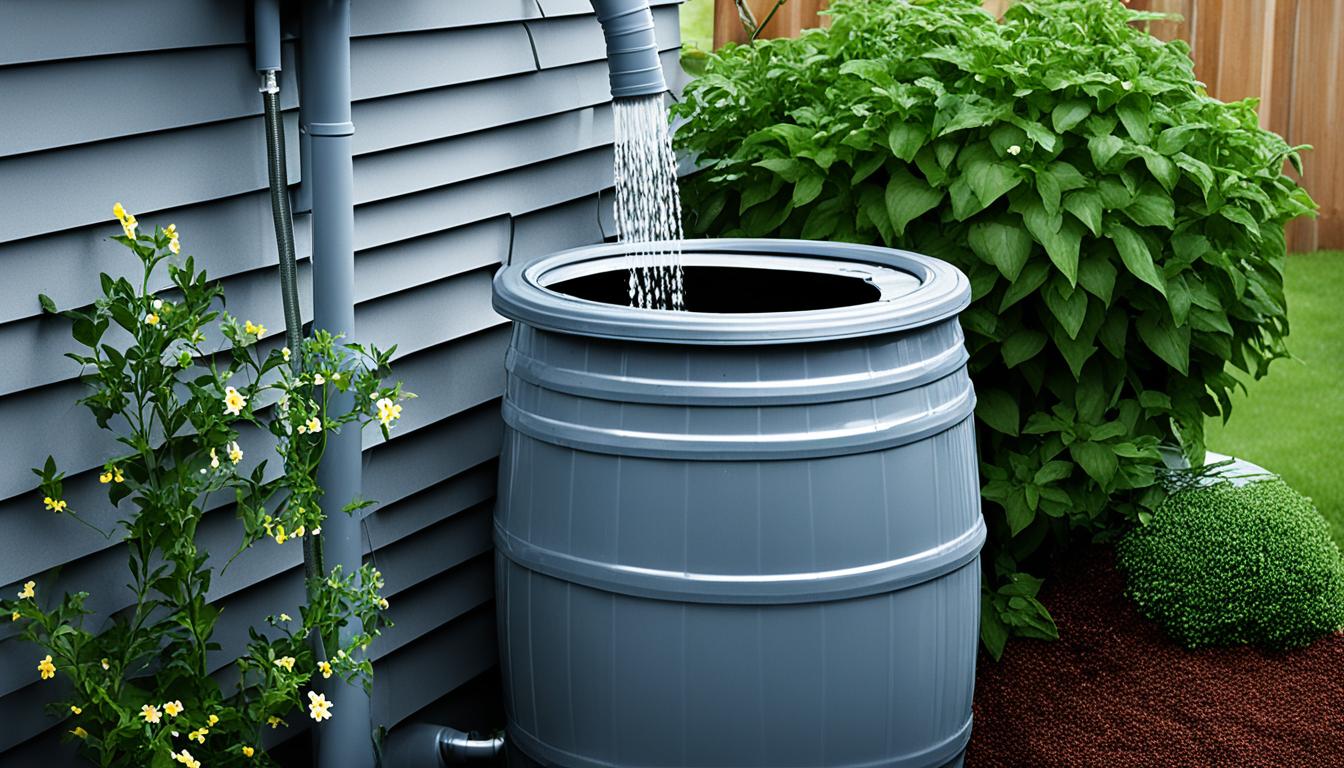
Rainwater harvesting is a green way to collect and store rainwater for different uses. It helps the environment and saves you money. This guide will show you how it can cut down on water use and reduce stormwater runoff. It also makes watering your garden cheaper.
If you’re a homeowner, business owner, or just want to live greener, this article is for you. It will give you the info you need to start harvesting rainwater at home.
Rainwater Harvesting: An Introduction
Rainwater harvesting means collecting, storing, and using rainwater for things like watering plants, household chores, or industrial needs. This method has been around for centuries, used by ancient cultures in the Middle East, Asia, and South America. It’s a key way to save water and make our communities more sustainable.
What is Rainwater Harvesting?
Rainwater harvesting is all about catching and storing rainwater that would otherwise be lost. This water can be used for many things, like watering plants, washing clothes, or even drinking. It’s a way to use nature’s water wisely and save this valuable resource.
The History of Rainwater Harvesting
Rainwater harvesting has a long history, going back thousands of years. Ancient people in the Middle East, Asia, and South America saw its value. They built systems like dams and cisterns to store rainwater in dry areas.
In South America, the Inca Empire used terraced landscapes and stone channels to collect and share water. These old methods have led to today’s modern rainwater systems. They’re still key in saving water worldwide.
Environmental Benefits of Rainwater Harvesting
Rainwater harvesting is key to sustainable water management. It helps reduce the need for treated municipal water, which is good for water conservation. This approach also lessens the load on local water resources, making the area more sustainable.
Reducing Water Consumption
Using rainwater for things like watering plants, washing, or even drinking can cut down on water use. This lowers the need for treated water and protects groundwater. It helps ensure a sustainable water future for everyone.
Minimizing Stormwater Runoff
Rainwater harvesting is also great for dealing with stormwater runoff. In cities and suburbs, hard surfaces like roofs and sidewalks cause more runoff. This runoff can harm soil, pollute water, and cause floods.
By storing rainwater, we can reduce the amount of runoff. This makes our environment healthier and more sustainable.
Rainwater harvesting offers many benefits, like saving water, managing stormwater, and promoting sustainability. As more places see its value, we’ll likely see more rainwater harvesting systems. This will lead to a greener future.
Economic Advantages of Rainwater Harvesting
Rainwater harvesting offers big economic benefits for both homes and businesses. It cuts down on the need for municipal water, leading to lower bills. This makes it a smart choice for watering gardens or for industrial uses.
One big plus is the chance to save money. Using rainwater can greatly reduce water bills, saving money over time. This is especially good in places where water is expensive or scarce.
Installing a rainwater system can also make your property more valuable. It shows you care about saving water and can be a big selling point. This can increase the property’s worth and give you a good return on your investment.
Rainwater harvesting does more than just save money. It also helps ease the load on public water systems. This can lead to lower water rates for everyone. It makes local water systems more sustainable and helps the community.
Nature Tips: Rainwater Harvesting for Gardening
Rainwater harvesting is great for gardening and landscaping. It’s a way to keep your garden, lawn, and outdoor areas healthy. By using rainwater, you can cut down on treated municipal water and help plants grow sustainably.
Using Harvested Rainwater for Irrigation
Harvesting rainwater for your garden has many benefits. It’s soft, chemical-free, and perfect for watering plants and lawns. Unlike city water, it doesn’t have chlorine or other additives that can hurt plants. Using rainwater helps your garden grow and saves drinking water.
Rainwater Harvesting for Landscaping
Adding rainwater systems to your landscape changes the game for sustainable gardening. It feeds trees, shrubs, and plants, cutting down on extra water needs. You can also use it in rain gardens and bioswales to manage stormwater and recharge groundwater.
By using rainwater for gardening, irrigation, and landscaping, you make your outdoor space more self-sufficient and eco-friendly. It supports the water cycle and helps plants grow strong and healthy.

Residential Rainwater Harvesting Systems
Many homeowners are now using residential rainwater harvesting to manage water sustainably. These systems collect, store, and use rainwater for home and yard needs. This cuts down on the need for city water and helps save water at home.
Components of a Residential Rainwater Harvesting System
These systems have important parts that work together. They capture, store, and use rainwater well. The main parts are the collection surface (like the roof), gutters, a filter, a storage tank, and a system to get the water where it needs to go.
It’s key to design and install these parts right for the system to work well over time. Homeowners should think about the size of the collection area, how much water they need to store, and what they plan to use it for. This helps make the most of rainwater harvesting for their homes and gardens.
Knowing what a residential rainwater harvesting system includes helps homeowners make smart choices. They can start using this green way to manage water, use less city water, and help save water at home.
Commercial and Industrial Rainwater Harvesting
Rainwater harvesting is not just for homes. It’s also big in the commercial and industrial world. Companies and big facilities use it to cut down on water use, save money, and show they care about the planet.
For businesses, rainwater systems work well in many places like offices, stores, and hotels. They use it for things like watering plants, flushing toilets, and filling cooling towers. This way, they use less city water, save money, and help the environment.
Industrial places also gain a lot from rainwater harvesting. Factories, warehouses, and big operations need a lot of water for cooling, cleaning, and other uses. By using rainwater, they can use less potable water and save money and resources.
The Bullitt Center in Seattle, Washington, is a great example of this. It’s a six-story office building aiming to be super green. Its rainwater system collects and stores rainwater for things like toilet flushing and watering plants.
More companies and industries are seeing the value in saving water. So, using rainwater systems is becoming more common. It helps them save money, lessen their environmental footprint, and show they’re serious about being sustainable.
Rainwater Harvesting Regulations and Policies
Rainwater harvesting is becoming more popular, and it’s important to know the rules and policies around it. In the U.S., local and state governments have set rules and incentives to encourage using rainwater wisely. These rules help keep the water safe and promote its efficient use.
Local and State Regulations
Rules for rainwater harvesting vary a lot by region. Some places need permits for these systems, while others have rules on how the water can be used. For example, some areas don’t let rainwater be used for drinking. It’s mainly for things like watering plants or flushing toilets.
Some places also have rules for the quality of harvested rainwater. They might require treatment to make sure the water is safe. It’s important for people and businesses to know these rules. They affect how to set up and use rainwater systems.
Knowing the local and state rules helps homeowners and businesses follow the law. It also opens up chances for getting money back from local governments or utilities for using rainwater systems.

The rules around rainwater harvesting are changing as we need more sustainable water solutions. By keeping up with these changes, people and businesses can make the most of this valuable resource. This way, they can follow the laws and enjoy the benefits of using rainwater.
Rainwater Harvesting Maintenance and Safety
Keeping a rainwater harvesting system in good shape is key for its long-term success and safety. By taking care of it, you make sure it keeps giving you clean water for many uses. This includes watering plants, washing, or even for industrial needs.
It’s important to clean the system often. This means keeping the gutters, downspouts, and tanks free from leaves and other debris. Changing filters regularly also helps keep the water clean. And, testing the water quality now and then is a good idea to catch any problems early.
When it comes to safety, think about how you can protect your rainwater system. Things like preventing overflows and treating the water can make it safer. Overflows stop water from causing floods or harming the land around your system. Treating the water, like filtering or disinfecting it, makes it safe for use.
By following these maintenance and safety steps, you can get the most out of your rainwater system. This way, you’ll have a steady supply of clean water for a long time.
Innovative Rainwater Harvesting Techniques
The need for sustainable water management is growing fast. New ways to capture and use rainwater are being developed. One exciting method combines rainwater harvesting with green roofs for a better approach to water and city design.
Integrating Rainwater Harvesting with Green Roofs
Green roofs are becoming popular for their many benefits. They help reduce stormwater runoff, save energy, and make buildings look better. Adding rainwater harvesting to these roofs takes sustainable efforts even further.
By using rainwater harvesting with green roofs, we can store the rainwater that falls on the roof. This water can be used for things like watering the roof plants or for other landscaping needs. It helps lessen the strain on city water supplies and reduces stormwater runoff.
Green roofs also make rainwater harvesting more effective. The plants and soil on the roof filter and clean the rainwater. This means less treatment is needed before it can be used. This blend of green roof integration and innovative rainwater harvesting is a key part of the green building trend.
This approach is gaining popularity for its many advantages. We’ll likely see more projects that combine green roofs with advanced rainwater systems. By adopting these innovative rainwater harvesting methods, we’re moving towards a sustainable design future. This future values the careful use of our vital resource: water.
The Future of Rainwater Harvesting
Rainwater harvesting is set to become more important in solving global water shortages and promoting sustainable water use. We’ll see more advanced technologies and systems for collecting rainwater. This is because people are learning about its benefits for the environment and the economy.
New trends show rainwater harvesting combining with green roofs and smart home tech. These systems help use water better, lessen runoff, and meet sustainability goals. Governments will likely make rules and offer incentives to get more people to use rainwater harvesting.
In the future, collecting rainwater will be common in cities and countryside alike. As we deal with climate change and need more water, rainwater harvesting will play a big part. It will be essential for a sustainable and strong future.