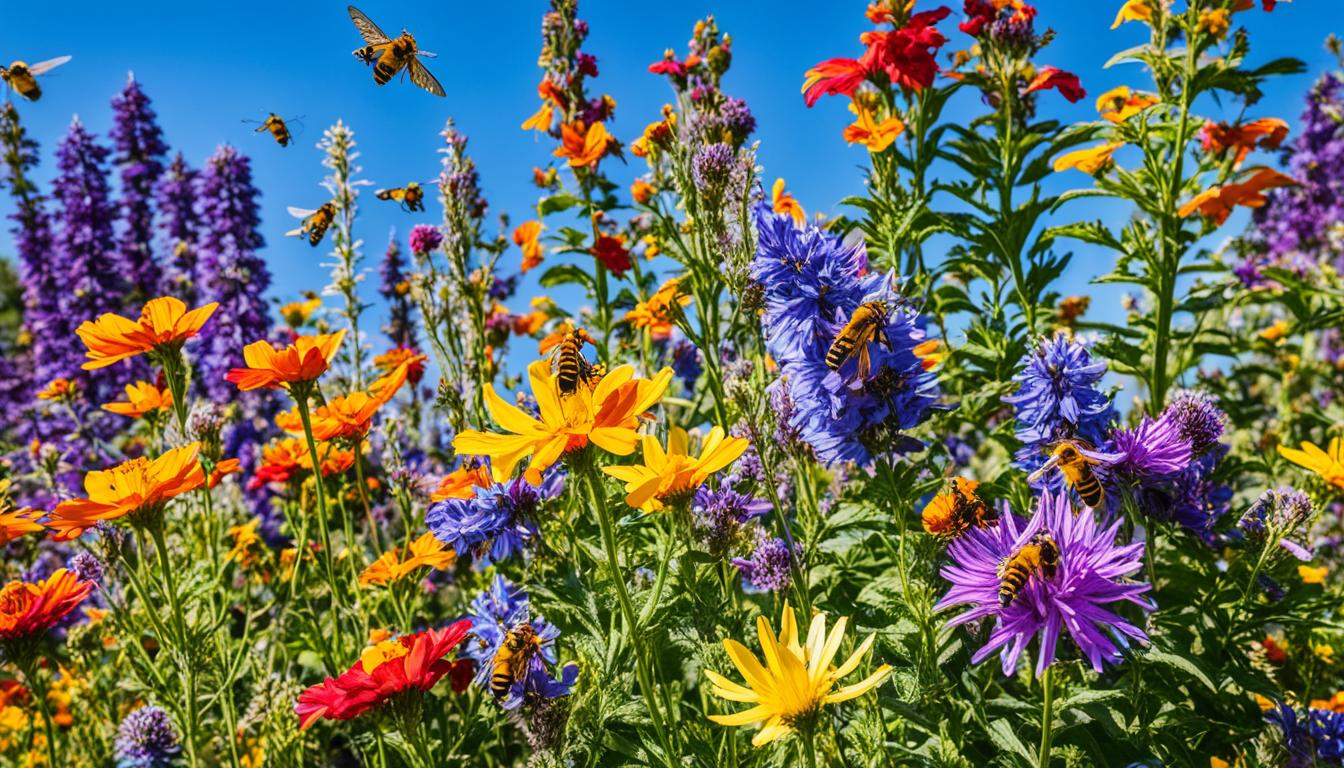
Pollinators are key to keeping our ecosystems healthy. Bees, butterflies, hummingbirds, and bats work hard to pollinate most of the world’s flowers. This includes many fruits and vegetables we eat. Protecting them is vital for keeping our food supply safe for the future.
This article will look at how pollinators help us, why their numbers are dropping, and what we can do to help. By learning about pollinators and protecting their homes, we can keep our world in balance. This will ensure a better future for everyone.
What Are Pollinators and Why Do They Matter?
Pollinators are animals that help plants reproduce by moving pollen from one plant to another. This is key for growing fruits, veggies, and many other plants we eat. Without them, our food supply and ecosystems would be severely impacted.
Understanding the Role of Pollinators
Bees, butterflies, moths, hummingbirds, bats, and some small mammals and reptiles are all pollinators. Each one has special traits that let it work with certain plants. This balance is vital for our ecosystems.
Bees are great at pollinating many flowers. Hummingbirds are perfect for tubular flowers. And bats help pollinate plants that bloom at night, adding to the ecosystem’s variety.
The Incredible Diversity of Pollinator Species
There are over 200,000 known pollinator species worldwide. From tiny sweat bees to big monarch butterflies, each one has its own way of helping plants. This variety is key for a healthy ecosystem.
These pollinators are vital for our ecosystems’ health and productivity. They help many plants grow, which supports food and homes for other species.
Keeping pollinators safe is important for our ecosystems and the services they provide. These include food, climate control, and clean water.
The Alarming Decline of Pollinator Populations
In recent years, many pollinators like bees, butterflies, and hummingbirds have seen a big drop in numbers. This is a big worry for our environment. Things like losing their homes, pesticides, climate change, and diseases are all hurting these important animals. This hurts our food supply and the health of our planet.
The drop in pollinators is a big problem. They help plants make seeds, which includes many fruits and veggies we eat. Without them, making food would be much harder. This could lead to big problems for our food security and health.

Pollinators face many dangers. Losing their homes to cities, farms, and forests is a big issue. Pesticides and other chemicals also harm them, making it hard for them to live and have babies.
Climate change makes things even worse. It changes the weather and the seasons, making it hard for pollinators to survive. Many are struggling to adapt, which means fewer of them and even local extinctions.
We need to do many things to help pollinators. This means changing laws, teaching people, and doing things ourselves. By understanding the dangers and helping their homes, we can keep our ecosystems and food safe.
Causes of Pollinator Decline
Pollinators like bees, butterflies, and hummingbirds are key to our ecosystems and food supply. But, they are declining at an alarming rate. The main reasons are habitat loss, pesticide use, and pollution.
Habitat Loss and Fragmentation
Urban and agricultural growth is destroying pollinators’ homes. This leaves them without the food and shelter they need. Habitat loss and fragmentation make it hard for pollinators to survive.
These changes also stop pollinators from moving between their resources. This disrupts their populations even more.
Pesticide Use and Pollution
Pesticides and other chemicals are harming pollinators. They can weaken their immune systems and disrupt their breeding. Some can even poison them.
Pollution, like heavy metals in soil and water, also hurts pollinators. It affects their health and survival.
We must act to save pollinators. Understanding their threats helps us protect them. This is key for our ecosystems and food future.
The Consequences of Pollinator Loss
The decline of pollinators like bees and butterflies is a big worry for our food supply. These creatures are key to growing many of the foods we eat. Without them, we could see a big drop in food production, leading to shortages and high prices.
Impact on Food Production and Security
Many of our favorite fruits, veggies, and nuts need pollinators to grow. Without them, we’d have much less food. This could lead to food shortages and make it harder for people around the world to get enough to eat. Keeping pollinators safe is key to having enough food for the future.
When pollinators disappear, it affects the whole ecosystem. This can hurt the health and growth of the plants we eat. It shows we need to act fast to protect pollinators and keep our food safe.
Nature Tips: Practical Ways to Support Pollinators
Protecting our pollinators is key to keeping our ecosystems healthy. We can help by using simple nature tips. These actions support pollinators and make our yards friendly for them.
Planting native, pollinator-friendly plants is a big help. These include flowers, shrubs, and trees that bees, butterflies, moths, and hummingbirds love. By choosing plants that bloom at different times, we give pollinators food all season.
It’s also important to use fewer pesticides and herbicides. These can harm pollinators by affecting their food, breeding, and health. Instead, try organic gardening to keep pests away naturally.
Creating safe places for pollinators to nest and survive is crucial. Leave some areas with bare soil, leaves, or dead wood. This gives them shelter and breeding spots. Also, keeping parts of your garden wild helps support many pollinators.
By using these nature tips, we can all help protect pollinators. They are vital for our ecosystems’ health. Together, we can make a better future for nature and people.
Creating Pollinator-Friendly Gardens
Creating a pollinator-friendly garden is a great way to help pollinators. You should pick native, nectar-rich plants that feed and shelter many pollinators all season. By using plants that fit your local climate, you make a home for pollinators in your yard.
Choosing Native Plants for Pollinators
Native plants are crucial for a pollinator-friendly garden. They’ve grown with local pollinators, offering the right nectar and pollen. Adding a mix of native flowers, trees, and shrubs makes your garden a rich pollinator habitat. This supports bees, butterflies, hummingbirds, and moths.
Native plants need less care and water, making them good for your garden. They bloom at different times, giving pollinators food all season. This means from early spring to late fall, they always have something to eat.

When picking native plants, think about how much sun they need, the soil type, and how they grow. Look into what pollinators like and choose plants that fit their needs. This way, you help save these important creatures and enjoy their beauty in your garden.
Sustainable Agricultural Practices
Adopting sustainable agriculture is key to helping pollinators. Farmers can use many techniques that support pollinators and make our food systems sustainable. These methods help our food production systems last longer and be more resilient.
Reducing pesticide use is a big part of sustainable farming. Too many pesticides harm pollinators and upset the balance in nature. By using safer pest control methods, farmers can protect pollinators and still grow healthy crops.
Diversifying crop rotations is also crucial. Growing different crops at different times gives pollinators a steady food supply. This approach also makes farming less vulnerable to pests and environmental changes.
Adding pollinator-friendly areas to farms helps too. This means setting aside land for wildflowers, creating hedgerows, or building wetlands. These spots give pollinators a place to live, find food, and take shelter. This boosts the health and variety of the ecosystem.
By using these sustainable farming methods, farmers help protect pollinators. They do this by using fewer pesticides, rotating crops, and creating safe areas for pollinators. These actions are key to keeping our farms working well and our food production strong.
Raising Awareness and Advocating for Pollinators
Protecting pollinators needs a team effort. We must teach the community and fight for their safety. By teaching people about the vital role these animals have, we help them act and support saving pollinators.
Educating the Community
Teaching the public about pollinators is key to their protection. We use educational campaigns, workshops, and outreach to share knowledge. This includes the variety of pollinators, the dangers they face, and how we can help.
By working with schools, community centers, and green groups, we encourage people to join in. They can participate in science projects, back conservation efforts, and push for laws that help pollinators and their homes.