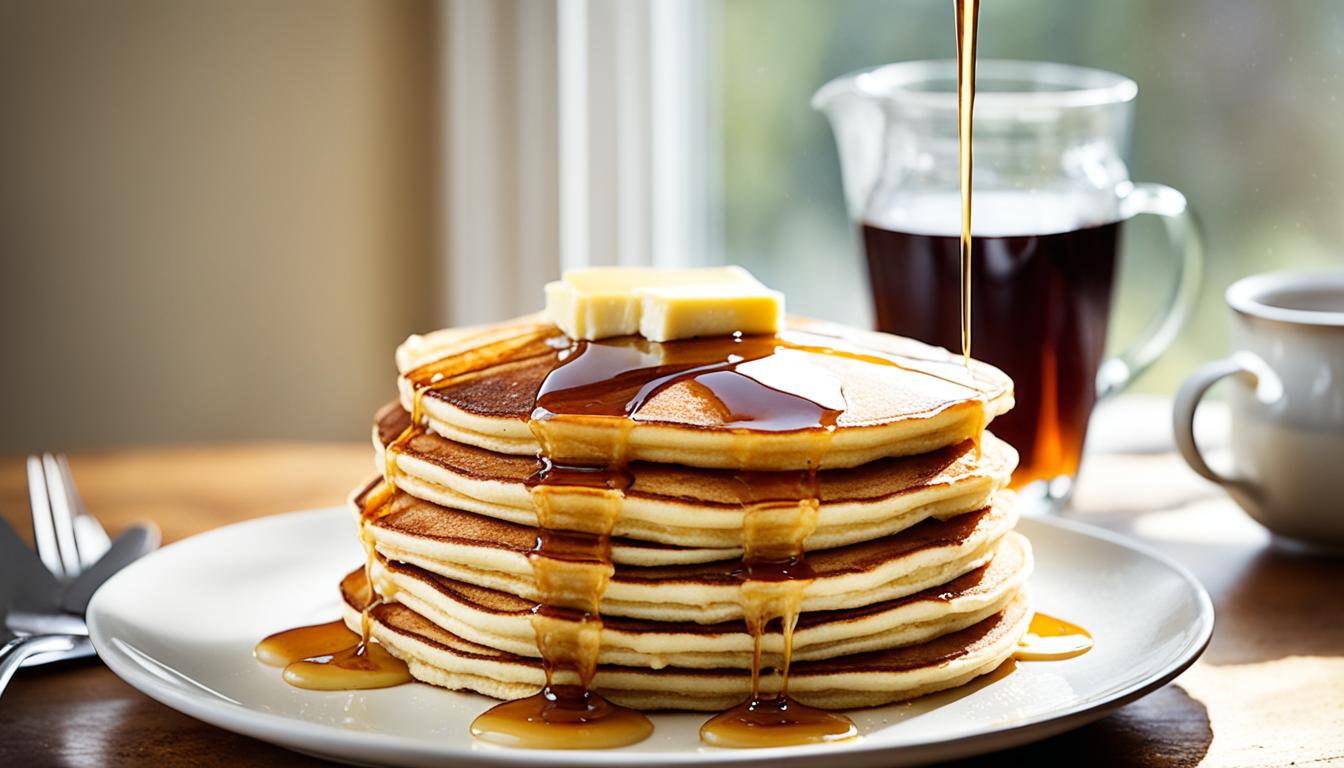
Calling all pancake lovers! Ever dreamed of making pancakes that are light and airy, making everyone at brunch jealous? You’re in the right spot. We’ll share the key techniques and ingredients for fluffy pancakes every time. These tips are great for both experienced cooks and beginners, making your pancakes a hit with family and friends.
Learn how to mix ingredients perfectly and the importance of baking soda and buttermilk. With these secrets, you’ll make pancakes that impress. Get ready to wow everyone with your new pancake skills and explore a world of tasty breakfast treats.
Mastering the Art of Light and Airy Pancakes
Making perfect pancakes that are light and airy takes practice. But, with the right ingredients and mixing methods, you can get it right. It’s all about knowing what makes pancakes fluffy and how to mix them well.
Essential Ingredients for Fluffy Perfection
For fluffy pancakes, you need a few key ingredients. Flour, eggs, and baking powder are the main ones. They work together to make the batter just right.
High-quality all-purpose flour gives structure. Eggs add richness and help hold the batter together. Baking powder makes pancakes airy. Getting these ingredients right is key to making great pancakes.
Mixing Techniques to Achieve the Ideal Texture
How you mix the batter affects the pancakes’ texture. Overmixing makes them tough, while undermixing can leave them lumpy. The goal is to mix just right.
When mixing, gently fold the ingredients together. This avoids overworking the batter. It helps the flour’s gluten develop without making the pancakes tough. This is a key step in making fluffy pancakes.
Unlocking the Power of Baking Soda and Buttermilk
Looking for fluffy, melt-in-your-mouth pancakes? The duo of baking soda and buttermilk is your answer. These simple ingredients turn your batter into a light, airy treat.
Baking soda is a leavening agent that releases carbon dioxide bubbles with buttermilk. These bubbles get trapped, making your pancakes soft and fluffy. They also help your pancakes rise high.
Buttermilk adds a tangy flavor and richness to your pancakes. It makes them moist and tender. The acid in buttermilk also softens the flour’s gluten, avoiding tough pancakes.
Together, baking soda and buttermilk create a perfect mix of flavors and textures. They make your pancakes stand out, whether for a weekend brunch or a weekday breakfast. These ingredients will make your pancakes the star of the meal.
Temperature Matters: Keeping Your Batter Chilled
The temperature of your pancake batter is key to a fluffy texture. Keeping it cold is the secret to light and airy pancakes. By knowing how temperature affects the texture, you can make delicious pancakes every time.
Why a Cold Batter Leads to Fluffier Pancakes
A cold pancake batter acts differently than one at room temperature. The cold makes the fat in the batter, like butter or oil, solidify a bit. This creates air pockets that get bigger when the batter hits the hot griddle, making pancakes fluffy and soft.
Also, a cold batter won’t get overmixed easily, which stops it from becoming dense and tough. The cold slows down gluten development. This lets you mix just enough without overdoing it.
It’s important to keep your batter cold not just when mixing, but also while cooking. If it gets too warm, it loses its airiness and becomes dense.

Tips for Keeping Pancake Batter Chilled
Here are some tips to keep your batter chilled:
1. Chill your ingredients: Put your mixing bowl, whisk, and utensils in the fridge for 30 minutes to an hour before mixing. This keeps everything cold as you mix.
2. Use ice water: Add ice water to your recipe to lower the batter’s temperature.
3. Refrigerate the batter: If you’re not cooking right away, put the mixed batter in an airtight container in the fridge. Stir it before cooking.
4. Keep the griddle or pan cool: Don’t let your cooking surface get too hot. This can warm the batter too fast. Keep the temperature moderate for even cooking.
Follow these tips and understand the importance of a cold batter. You’ll make light, airy, and fluffy pancakes every time.
Griddle Mastery: Achieving the Perfect Cooking Surface
Choosing the right cooking surface can make a big difference in making fluffy pancakes. Cast iron and non-stick griddles are top choices, each with their own benefits. Knowing the pros and cons of these surfaces can help you pick the best one for your pancakes.
Cast Iron vs. Non-Stick Griddle: Which is Best for Pancakes?
Cast iron griddles are favorites among home cooks and chefs. They heat evenly and prevent hot spots, so pancakes cook well. Over time, a cast iron griddle gets a non-stick surface, making pancakes easy to flip. But, it needs regular cleaning and re-seasoning to stay non-stick.
Non-stick griddles make cooking easy right away. Pancakes slide off easily, making mornings quicker. They’re also easy to clean, but the non-stick coating can wear off, causing sticking issues.
Choosing the best surface for pancakes depends on what you like and how you cook. Cast iron gives great heat and a natural non-stick surface with some work. Non-stick griddles are easier to use but need less care.
It doesn’t matter which you choose, preparing the surface well is key for perfect pancakes. Make sure to preheat and grease the griddle, whether it’s cast iron or non-stick. This way, you’ll make fluffy, golden pancakes every time.
Food & Recipes: Pancake Toppings and Flavor Combinations
Pancakes are a versatile breakfast staple, offering a blank canvas for endless flavor possibilities. Whether you prefer sweet or savory, there are countless creative pancake topping ideas to elevate your morning routine. Explore the world of pancake flavors and discover new ways to personalize your flapjack experience.
Start with the classics – butter and maple syrup are always a winning combination. But don’t be afraid to venture beyond the traditional. Sweet tooth? Try topping your pancakes with fresh fruit, whipped cream, chocolate chips, or a sprinkle of cinnamon sugar. For a savory twist, consider sautéed mushrooms, crumbled bacon, shredded cheese, or a fried egg.
Infusing your pancake batter with unique flavors can also take your breakfast to new heights. Experiment with mix-ins like blueberries, banana, pumpkin, or even savory ingredients like herbs and spices. The possibilities are endless when it comes to creating creative pancake recipes that will inspire your taste buds.
No matter your preference, the key to making the most of your pancake experience is to have fun and let your creativity shine. Embrace the versatility of this breakfast staple and explore a world of sweet and savory pancake flavor combinations that will have you looking forward to your morning meal.
Beyond Butter and Syrup: Creative Pancake Toppings
Pancakes are a favorite for breakfast, but let’s take them up a notch. Explore unique and tasty pancake toppings to make your flapjacks stand out. These toppings will turn your pancakes into something special.
Sweet and Savory Topping Ideas to Elevate Your Pancakes
Try sweet and savory toppings to add depth and excitement to your pancakes. You can use fresh fruits or caramelized nuts for a tasty twist. There are endless options for unique pancake topping ideas. Move past the usual sweet and savory pancake toppings and discover how to elevate basic pancakes with new flavors.

For a savory touch, add crispy bacon, sautéed mushrooms, or creamy avocado on top. For sweetness, go for nutella, cinnamon sugar, or fresh berries. The goal is to mix different textures and tastes to find your ideal pancake combo.
Pancakes are all about being creative. Don’t hesitate to try new toppings. With a bit of creativity, you can turn your breakfast into a work of art.
Pancake Troubleshooting: Fixing Common Mistakes
Even seasoned pancake lovers can run into problems. Issues like dense, flat, dry, or soggy pancakes can ruin your breakfast. But don’t worry, we have tips to fix these problems and make your pancakes fluffy every time.
One big issue is dense, heavy batter that won’t rise. This happens when you mix the ingredients too much, creating tough pancakes. To fix this, mix the dry and wet ingredients gently. A few light strokes with a whisk or spoon are enough.
If your pancakes are flat and lifeless, it might be because they’re not rising enough. Make sure you use the right amount of baking powder or baking soda. Also, let the batter rest for 10-15 minutes before cooking. This helps the ingredients hydrate and creates air pockets for fluffier pancakes.
Another issue is dry, crumbly pancakes. This often comes from using too much flour or not enough liquid. Adjust the flour-to-liquid ratio and add buttermilk or yogurt to keep your pancakes moist and tender.
Soggy, undercooked pancakes can happen if your cooking surface isn’t hot enough. Ensure your griddle or skillet is preheated and keeps a steady temperature. Don’t flip your pancakes too soon, as this can prevent them from cooking properly and make them gooey.
By fixing these common pancake problems, you’ll get better at making light, fluffy, and tasty pancakes. Happy cooking!
Make-Ahead Pancake Batter: Meal Prep for Busy Mornings
Mornings can be hectic, but you don’t have to give up homemade pancakes. Learning to make pancake batter ahead lets you enjoy hot, fluffy pancakes with little effort on busy days. This meal prep is perfect for busy homes, making it easy to store and reheat the batter.
Tips for Storing and Reheating Pancake Batter
Getting ready for busy mornings is easier with the right prep. After mixing a batch of light and airy batter, store it in the fridge for up to 5 days. Put it in an airtight container or a resealable bag, and it’s set for quick use.
To cook, just scoop out the batter and heat it on your griddle or skillet. Reheat the batter over medium heat, stirring often to avoid thickening or skin formation. With practice, you’ll quickly have fresh pancakes ready.
Prepping pancake batter saves time and ensures a healthy breakfast is always ready. It’s ideal for families or anyone wanting to simplify mornings. This method makes easy pancakes possible any day of the week.
Gluten-Free and Vegan Pancake Variations
We’ve got you covered with tasty gluten-free and vegan pancake recipes. Learn how to make light and fluffy pancakes for different tastes. From classic buttermilk to dairy-free and grain-free, there’s something for everyone.
Discover the world of gluten-free pancake recipe options. Almond flour, oat flour, and quinoa flour are stars in these recipes. They offer the same great texture and taste you love, without the gluten.
Explore vegan pancake options for plant-based treats. Use silky aquafaba or creamy coconut milk in your batter. These vegan-friendly recipes will surprise you with their fluffy, melt-in-your-mouth texture. Enjoy alternative pancake recipes for dietary restrictions that are both delicious and healthy.