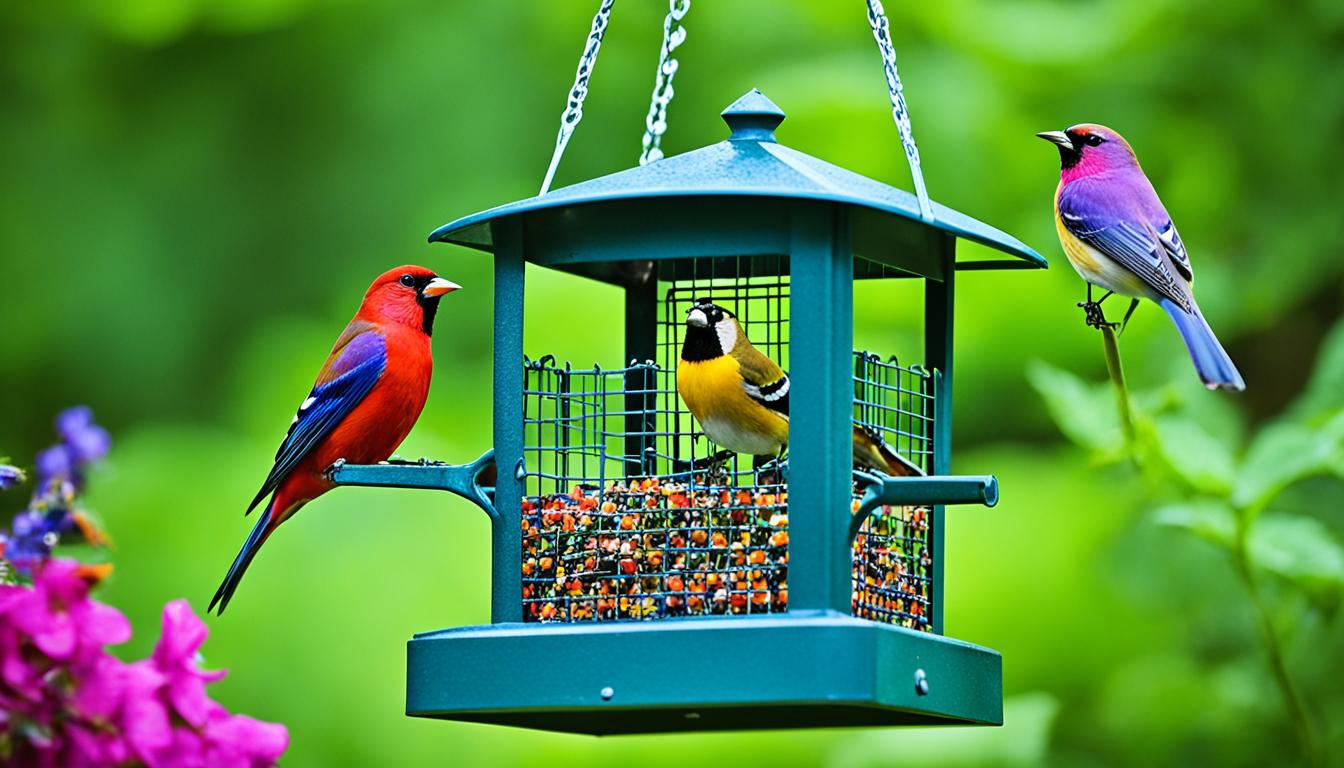
Turn your outdoor area into a lively spot for birds with these expert tips. Learn how to make your yard a welcoming place for many different birds. You’ll discover how to pick the best feeders and baths and how to plant native plants. This will help you create a backyard birds paradise.
If you love watching birds or want to make your garden more bird-friendly, these tips are for you. They’ll show you how to build a bird habitat that supports your bird friends. Get ready to see colorful birds, hear their beautiful songs, and watch their graceful moves in your yard.
Providing the Right Bird Feeders
Attracting different bird species starts with the right bird feeders. The type of feeder you use can change the types of birds that visit. From classic tube feeders to hummingbird feeders, each one attracts different birds.
Types of Bird Feeders
Tube bird feeders are popular and versatile. They offer a variety of bird seed for many birds. Hopper feeders are great for large groups, as they hold more seed.
Hummingbirds love nectar feeders filled with sweet nectar. Suet feeders attract birds like woodpeckers and chickadees with their high-energy food. Platform feeders are perfect for ground-feeding birds like sparrows and doves.
Seed and Food Options
Offering a variety of food in your bird feeders is key. Black oil sunflower seeds, nyjer seed, safflower seed, and millet attract many birds. Suet cakes or nuggets give insect-eating birds a nutritious treat.
Hummingbirds need nectar, which you can make with sugar and water. Keeping hummingbird feeders filled and in your yard can bring these birds often.
Creating a Birdbath Oasis
Creating a birdbath is a great way to attract many birds to your yard. A well-designed birdbath can become the main attraction for birds. It draws them in to drink and bathe in its clean water.
Think about what your local birds like when making a birdbath. The bath should be shallow, 1 to 3 inches deep, for all bird sizes. It should also have gently sloping sides for easy access.
Where you put the birdbath is important. Place it where it’s safe from wind and predators but still easy to see from inside. Putting it near plants and trees gives birds a safe place to perch and hide.
Keeping the birdbath clean and full of water is key. Fill it up often and clean it every few weeks to stop algae from growing. A clean, inviting birdbath will make your yard a hit with birds.
Planting Native Vegetation
Start making your backyard a bird paradise by adding native plants, shrubs, and trees. These plants are perfect for birds because they offer safe places to nest. They also draw in many birds with their sweet flowers and lots of food.
Shrubs and Trees for Nesting
Native shrubs and trees are key for birds looking for safe places to nest. Holly, juniper, and evergreen conifers have thick leaves that keep nests safe from predators and bad weather. Deciduous trees like oak, maple, and birch have strong branches and big canopies that are great for nesting.
Flowers for Nectar
Adding different types of flowers that make nectar can bring hummingbirds, butterflies, and other pollinators to your yard. Native wildflowers like purple coneflower, bee balm, and trumpet vine are loved by these birds. They give them food all season long.
By adding native plants, shrubs, and trees to your yard, you make a great place for birds. It will be fun for you and your bird friends for many years.

Offering Suitable Nesting Boxes
Adding bird nesting boxes to your backyard is a great way to draw different birds. These bird houses give birds a safe place to make their homes and raise their young. By picking and placing these boxes right, you can make your yard more inviting for birds.
Nesting Box Placement
Putting your bird nesting boxes in the right spot is key. Hang them where they’re safe from the weather but easy for birds to get to. Make sure they’re not too close to places where many birds fly by, predators, or too much sun.
Having nesting boxes near things that attract birds, like feeders or birdbaths, can also help. The height of the boxes matters too. Most birds like them 5 to 20 feet off the ground, facing away from the wind. Make sure the entrance is big enough for birds to easily go in and out.
Choosing and placing your bird nesting boxes carefully makes your yard a better place for birds. These homes will make bird-watching fun and help your outdoor space feel more alive.
Nature Tips: Attracting Specific Bird Species
Do you want to bring more birds to your backyard? By learning what different birds like, you can make your yard a welcoming place. This way, you can attract hummingbirds, songbirds, and even woodpeckers.
To attract hummingbirds, plant flowers like fuchsias, petunias, and salvias. These flowers have lots of nectar that hummingbirds love. Also, hang hummingbird feeders with sugar-water and keep them clean.
For songbirds, offer plants with seeds and different bird feeders. Sunflowers, nyjer seed, and millet are great for them. Use various feeder styles to attract many songbirds.
To get woodpeckers, add dead or decaying trees or branches to your yard. These provide insects and places for them to nest. You can also use suet feeders and give peanuts to attract woodpeckers.
Creating a diverse yard is key to attracting many bird species. By meeting the needs of different birds, you can enjoy watching a variety of birds in your backyard.
Maintaining a Clean and Safe Environment
Creating a bird-safe backyard is key for our feathered friends’ well-being. Keeping it clean and free from hazards is vital. Regularly cleaning bird feeders helps prevent disease and keeps birds safe.
Stopping window strikes is also crucial. Birds hitting windows can get hurt or even die. You can use window decals, screens, or other deterrents to make windows visible to birds. This keeps them safe from deadly accidents.
It’s also important to remove dangers like toxic plants, exposed wires, or sharp objects. A safe backyard means a place where birds can live and thrive.

Cleaning your bird feeders often is key for your backyard birds’ health. Use a mild soap and water solution to clean them. Remove any moldy or spoiled food to stop disease spread. This simple step keeps your birds safe and well-fed.
By following these tips, you’ll make your backyard a safe haven for birds. A clean, safe space means more birds will visit. You’ll get to enjoy their beauty and the ecosystem they support.
Incorporating Bird-Friendly Accessories
Make your backyard bird-watching better with bird-friendly accessories. These items give your birds shelter and places to rest. They make your outdoor area more welcoming and interesting.
Bird Houses and Perches
Bird houses and perches are great for your backyard birds. They offer safe places for birds to nest and hide from predators. Choose bird houses that fit the size and needs of the birds you want to attract.
Perches let birds rest, preen, and watch their territory. Add perches at different heights for various bird species. This way, more birds can enjoy your backyard.
When picking bird houses and perches, match them with your backyard’s look. You can find everything from rustic wooden houses to modern perches. This way, they’re both useful and look good.
Adding these accessories makes your outdoor space more beautiful and bird-friendly. Enjoy birdwatching and the lively presence of your backyard birds.
Creating a Peaceful Atmosphere
Making your backyard a peaceful place is key to drawing in birds. By cutting down on noise and creating a calm spot, you help birds feel safe and at ease.
To make your backyard quiet, place bird feeders and baths where they won’t get disturbed. Use plants with thick leaves or add water features to lessen noise. This makes your backyard a quiet spot for birds.
Also, think about your garden design to add peace. Use native plants and trees that birds like for shelter and nesting. This makes your garden better for birds and more beautiful for you.
Focus on making your backyard peaceful to attract many bird types. You’ll create a calm, bird-friendly spot to enjoy outside.
Observing and Identifying Backyard Birds
Birdwatching, or backyard bird watching, is a fun hobby that lets you connect with nature. It’s right in your own backyard. By learning to spot and identify different bird species, you’ll grow to love the birds that visit you.
Improving your bird identification skills is easy and fun. Start by watching the birds closely. Notice their size, shape, colors, and how they act. Use field guides, apps, or websites to help you figure out who they are.
As you get to know the backyard birding in your area better, you’ll recognize regular visitors. You might even see new birds. Keep a journal of the birds you see, including the date, time, and any interesting things you notice. This helps you see how the bird life in your backyard changes over time.
Birdwatching is a great way to relax and connect with nature. By watching and identifying the birds in your yard, you’ll appreciate the wildlife that lives nearby even more.
Incorporating Bird-Friendly Water Features
Having fresh water is key to drawing birds to your yard. Add bird baths, water fountains, ponds, and water gardens to make a bird-friendly oasis. This will attract many different birds to your outdoor area.
Birdbaths and Fountains
Birdbaths let birds bathe, drink, and cool down. Choose a shallow bath with easy-to-reach sides. Adding a pump for a fountain effect keeps the water fresh and appealing.
Place the bath where birds can safely perch and hide. This makes them feel secure while they use the bath.
Ponds and Water Gardens
For a bigger water feature, think about a backyard pond or a small water garden. These can be a big hit with many bird species. Make sure your pond or garden has sloping edges and shallow spots for easy access.
Add rocks or perches for birds to land on safely. Planting native plants around the pond can draw in more birds, insects, and wildlife.
Adding different bird water features to your yard will make it a great place for birds. Just remember to keep them clean and safe for the birds.
Seasonal Considerations for Backyard Birds
Caring for backyard birds is a year-round task. The needs and behaviors of birds change with the seasons. Knowing these changes helps keep your backyard a safe place for birds all year.
Winter Bird Care
When it gets cold and food is scarce, backyard birds depend on your feeders and shelters. Offering high-energy seeds, nuts, and suet can help them survive the cold. Also, make sure they have places to hide, like roosting boxes and evergreen shrubs, for warmth and safety.
Attracting Birds in Spring and Summer
Spring and summer make your backyard busier as birds come back and start nesting. Planting native flowers and trees that offer nectar and berries attracts many species. Also, having fresh water, like birdbaths and small ponds, encourages birds to stay and visit your yard.