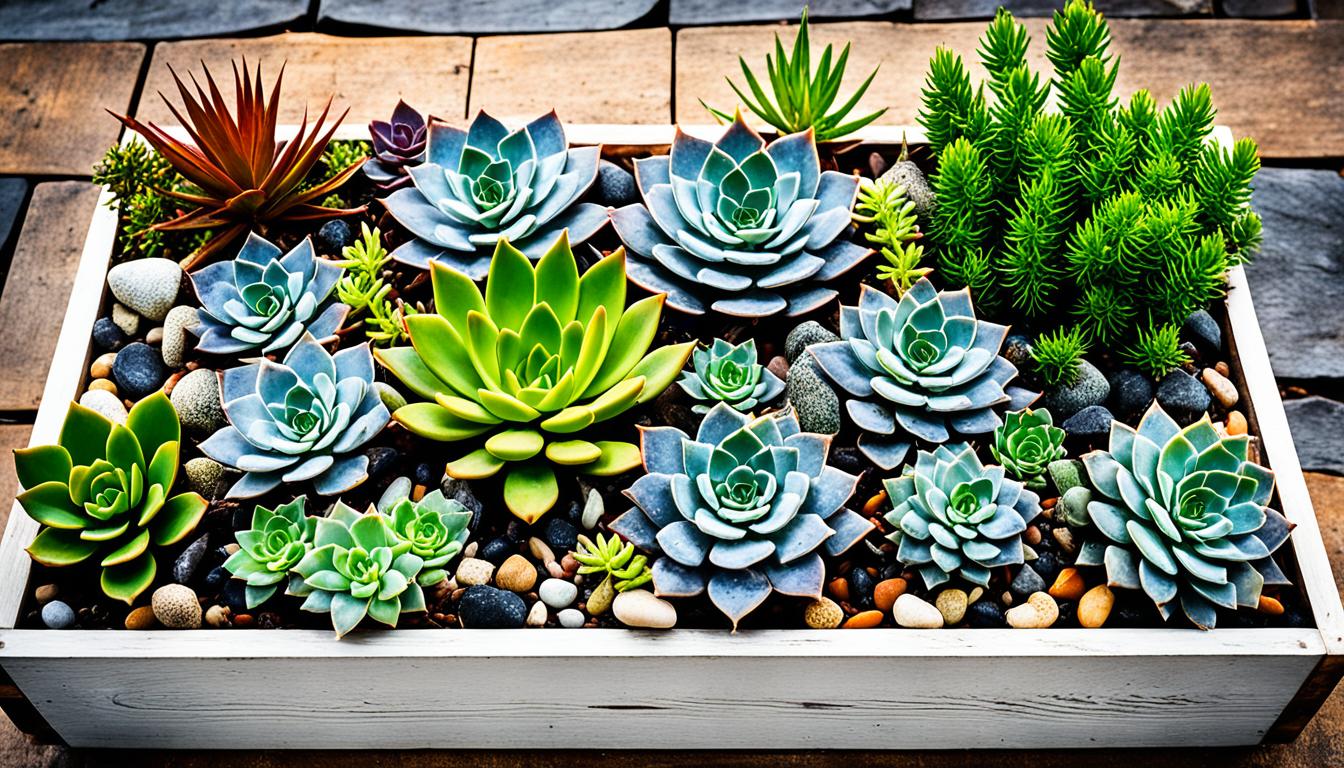
Learn how to make a thriving succulent garden with this easy guide. Succulents are great for those who want plants that are easy to care for and look amazing. They come in many shapes and sizes, perfect for both indoor and outdoor spaces.
We’ll cover everything you need to know about succulent gardening. You’ll learn about their needs, how to pick the right ones for your area, and how to plant and grow them. We’ll also talk about watering, sunlight, and how to keep pests away.
This guide is for everyone, whether you’re new to gardening or have been doing it for years. It will help you create a beautiful, easy-to-maintain succulent garden. Start your journey to a peaceful and beautiful oasis today.
Nature Tips: Unlocking the Secrets of Succulent Gardening
Succulent plants are amazing, thriving in many places and winning over gardeners everywhere. To make your succulent garden a success, learn what these plants need and which ones fit your area best.
Understanding the Unique Needs of Succulents
Succulents are known for being easy to care for, but they still have special needs. They love dry soil and don’t like too much water to prevent rot. By meeting these needs, your succulents will do great.
Choosing the Right Varieties for Your Climate
There are many types of succulents, so picking the right ones for your climate is key. Some love the heat, while others prefer cooler weather. Knowing which ones to choose will make your garden beautiful and easy to care for.
By knowing what succulents need and picking the right ones for your area, you’re on your way to a beautiful, easy-care succulent garden.
Creating the Perfect Succulent Garden Environment
Creating a thriving succulent garden is easy, whether it’s inside or outside. It’s all about giving these tough plants the best conditions to grow. This means picking the right containers and making sure they get enough light.
Choosing the right pot is key for succulents. They do well in shallow pots with good drainage. This lets their roots spread out. For indoor gardens, use pots like terracotta or glazed ceramic to keep moisture levels right and prevent root rot. For outdoor gardens, you can use many types of containers, like old vintage items or sleek modern ones.
Lighting is also very important for indoor succulent gardens. Succulents need a lot of sunlight. So, put them in a south-facing window or under grow lights. For outdoor gardens, pick a spot that gets at least 6 hours of direct sunlight a day. But, make sure some afternoon shade is available to protect the plants.
By thinking about the container, lighting, and where you place your succulents, you can make a beautiful, easy-care garden. This garden will show off the unique looks and bright colors of these amazing plants.
Soil Preparation: The Foundation of a Thriving Succulent Garden
Starting a succulent garden begins with the right soil. Choosing the right potting mix and making sure it drains well are crucial. These steps help create an ideal environment for your succulents to grow.
Selecting the Right Potting Mix
Succulents need special soil. They do well in succulent soil or succulent potting mix made just for them. These mixes have perlite, pumice, or coarse sand to help water drain fast and prevent waterlogging.
When picking a succulent potting mix, choose one that’s light, full of nutrients, and drains well. Don’t use regular potting soil, as it can hold too much water and cause root rot in succulents.
Drainage Considerations for Healthy Succulents
Good drainage is key for your succulent garden’s health. Succulents can easily get root rot and other problems if the well-draining soil doesn’t let water drain fast.
To improve drainage, add soil amendments for succulents like perlite, pumice, or coarse sand to your mix. These help create air pockets and make the soil more porous, letting water flow through easily.

By focusing on the right succulent soil and drainage, you’ll create a garden that will thrive. You’ll enjoy vibrant, healthy plants for many years.
Planting and Propagating Succulents Like a Pro
Learning how to plant and propagate succulents is key to a thriving garden. Whether you’re starting fresh or adding to your collection, knowing how to grow succulents from cuttings is crucial.
Step-by-Step Guide to Planting Succulent Cuttings
Propagating succulents is easy and rewarding. First, pick healthy leaves or stems from a succulent. Then, cut them off, leaving a bit of stem behind. Let the cuttings dry out for a few days to prevent rot and help roots grow.
After drying, put the cuttings in a potting mix made for succulents or cacti. Press them into the soil without covering them too much. Water a little, and put the pot in a sunny spot but not directly in the sun. Mist the soil now and then, watching for new growth.
With patience and the right methods, you’ll soon have many new succulents. Learning to plant and propagate succulents lets you create a beautiful, unique garden oasis.
Watering Techniques for Succulent Gardens
Proper watering is key for a thriving succulent garden. Succulents need water differently than regular houseplants. Knowing the best ways to water them is crucial for their health and growth. Let’s look at the best practices for succulent watering and how to avoid mistakes like overwatering and underwatering.
Avoiding Common Watering Mistakes
Overwatering is a big issue with succulent irrigation. Succulents can easily get root rot from too much water. So, it’s important to water them lightly. Check the soil by sticking your finger into it. Water only when the top inch or two feels dry.
But, don’t forget that underwatering can harm succulents too. If leaves start to wrinkle or change color, your plants need more water. Make sure to give them a good, deep soaking when the soil is dry, letting the water fully absorb.
The best way to water succulents is deeply but not often. This makes their roots grow deeper into the soil, helping them survive droughts better. Don’t water them too much too often, as this can cause weak roots and bring pests and diseases.
Sunlight Requirements for Succulents to Thrive
Succulents are known for their unique looks and need specific sunlight to grow well. Whether they’re in your indoor garden or outside, knowing the best lighting is key. This ensures they stay healthy and colorful.
Most succulents love full sun, needing at least 6 hours of direct sunlight daily. This sunlight makes their leaves thick and their colors bright. But, some like jade plants and echeveria can do well in partial shade too.

For indoor plants, put them near a south-facing window or use a grow light. Turn your succulents often to get even sunlight and stop them from growing crooked. Succulents look best with the right amount of light, showing off their beauty and colors.
Knowing what sunlight each succulent type needs helps you create the best space for them. With the right light, your succulent garden will be a sight to see, both indoors and outside.
Pest and Disease Management in Succulent Gardens
Succulents might look easy to care for, but they can get pests and diseases if not watched over. It’s key to spot and fix common issues to keep your garden full of life. We’ll look at how to keep your succulents healthy and free from pests.
Identifying and Treating Common Succulent Problems
Pests like mealybugs, aphids, and scale insects are common in succulent gardens. These tiny pests can harm your plants, making them look bad, grow slow, or even die. To fight these succulent pests, try removing them by hand, using insecticidal soaps, or neem oil.
Succulents can also get diseases like root rot, powdery mildew, and fungal infections. These usually come from too much water, bad drainage, or stress. To fix these succulent disease issues, make sure the soil is right, water wisely, and give your plants enough sun. Sometimes, you might need to use fungicides or other succulent disease treatment methods.
Keep an eye on your succulents and deal with pests or diseases fast to keep them healthy and looking great. Regular checks, taking steps to prevent pests, and treating diseases quickly will help your succulents do well.
Designing a Stunning Succulent Garden Landscape
Succulent gardens open up a world of creative possibilities for outdoor spaces. They can turn any garden into a beautiful oasis. With their ability to thrive in dry conditions, these plants are perfect for creating eye-catching landscapes.
Creative Container Ideas for Succulents
Succulents do well in many containers, making them ideal for container gardening. You can use old watering cans, wooden crates, or ceramic pots as unique homes for them. Group colorful echeverias, sedums, and aeoniums in a tiered planter for a beautiful display. Or, mount them in a vertical garden for a striking look.
When planning succulent container gardens, think about the contrast between shapes, textures, and colors. Mix tall, spiky succulents with low-growing ones for a lively look. Add pebbles, rocks, or sand on top for extra beauty.
But succulents aren’t just for containers. They can be part of your garden’s overall design. Use them as groundcover, over retaining walls, or among other plants for a unified look.
Succulent Garden Maintenance: Tips and Tricks
Keeping a succulent garden healthy is all about balance. It involves regular pruning and strategic fertilizing. We’ll share key tips to help your succulents stay vibrant.
Pruning Succulents for Optimal Growth
Pruning is key for succulent care. Trimming helps your plants look better and grow well. Use sharp tools to remove dead or damaged parts. This stops disease from spreading and keeps your succulents healthy.
Fertilizing for Lush, Vibrant Succulents
Succulents need special food for growth. Use a slow-release fertilizer made for them. Don’t overdo it, as too much can harm your plants.
Keeping Pests and Diseases at Bay
Watch your succulents closely for pests or diseases. Act fast if you spot any problems. Use organic pesticides and adjust watering to fight off common issues like mealybugs or root rot.
Follow these tips to keep your succulent garden beautiful. With the right care, your garden will flourish, bringing joy to your outdoor space.
Repotting Succulents: When and How to Do It Right
As your succulent garden grows, knowing when and how to repot your plants is key. Repotting is vital for their health and growth. This guide will help you repot succulents like a pro, whether you’re transplanting or refreshing the soil.
Timing is crucial for succulent repotting. You should repot them every 12-18 months, based on their growth and pot size. Signs like stunted growth or soil drying out too fast mean it’s time for a new pot.
The steps for repotting succulents are simple but important. First, pick a pot that’s a bit bigger than the old one. Succulents like to be a bit root-bound. Make sure the pot has good drainage holes to prevent waterlogging.
Next, carefully take the succulent out of its old pot without harming the roots. Then, put it in its new home. Add fresh, well-draining succulent transplanting soil. Don’t use regular potting soil; succulents need a mix that drains well and holds nutrients.
Water your repotted succulent lightly, letting the soil dry out fully before watering again. By following these steps, you’ll keep your succulents healthy and beautiful for years.
Happy gardening!
Embracing the Beauty of Succulent Garden Variety
Succulents are known for their wide range of forms, colors, and textures. They go from the delicate rosettes of Echeveria to the bold shapes of Agave. Each type offers something special for your garden.
Some people love the bright colors of Aeoniums. Others enjoy the unique, flowing leaves of Senecio. There’s a succulent for every taste.
Sedum stands out with their plump, button-like leaves in green, red, and purple. Then there’s Crassula ‘Buddha’s Temple’ with its curled leaves. And don’t forget Haworthia, known for its geometric patterns.
Kalanchoe is versatile, with flowers in soft pastels or bright colors. These add a splash of color to any garden.
Exploring succulent varieties can inspire you to create a unique garden. Try mixing different textures and growth habits. This way, you can make a garden that shows off the beauty of these tough yet beautiful plants.