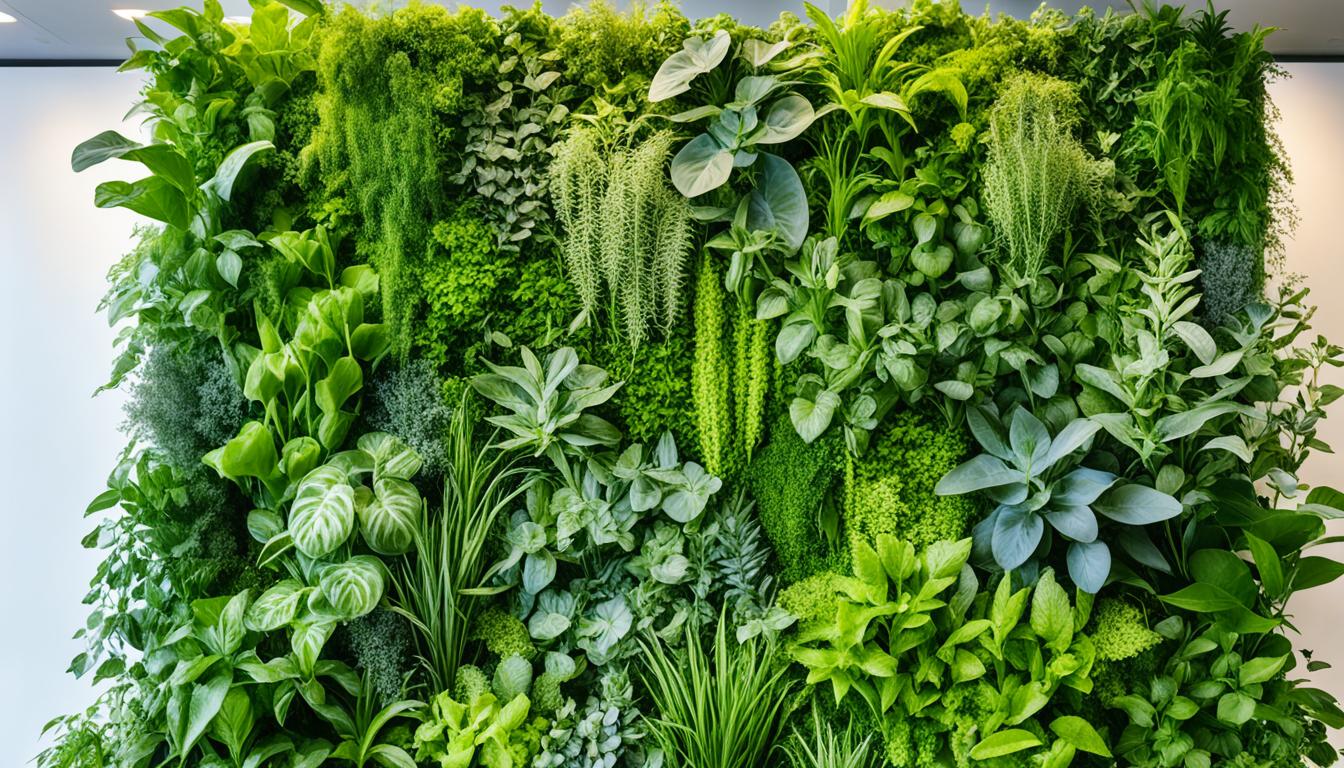
Are you curious about making a lush, space-saving vertical garden? This guide will show you how to turn your small space into a green oasis. It’s perfect for those with little outdoor space or who love nature’s beauty.
We’ll cover everything from the basics of vertical gardening to picking the right plants and building the structure. Get ready to dive into small space gardening and express your creativity. You’ll create a beautiful vertical garden that brings life to your indoor or outdoor space.
What is a Vertical Garden?
Vertical gardening is all about growing plants upwards. It uses vertical space instead of the usual horizontal way. This method lets you make the most of small spaces like balconies or patios. A vertical garden, or living wall, brings beauty and greenery into your life.
Understanding the Concept of Vertical Gardening
Vertical gardening uses structures like trellises or walls to grow plants upwards. These plants don’t spread out like they would on the ground. This way, you save space and add a unique look to your area, inside or outside.
Benefits of Growing Vertical Gardens
Vertical gardening has many perks. You can grow more plants in a small area, from vines to herbs. These gardens can also clean the air, offer insulation, and bring a touch of nature indoors. They’re perfect for those who love the environment and city living.
Choosing the Right Location
Finding the perfect spot for your vertical garden is key to its success. The right placement is vital for your plants to grow well. Think about sunlight, wall direction, and the area’s climate to make sure your garden does great.
Factors to Consider for Optimal Plant Growth
When picking a spot, sunlight is a big deal. Plants need different amounts of light. Some love full sun, while others like shade. Make sure the spot gets the right amount of light for your plants.
The wall’s direction also matters for your garden. A south-facing wall gets more sun than a north-facing one. This affects temperature and humidity, creating a unique climate. Knowing this helps pick the best plants and adjust for their needs.
Think about the location, sunlight, climate, and wall direction for your garden. Tailoring your garden to these conditions is crucial. This way, you’ll have a lush, vibrant, and lasting garden.
Selecting Suitable Plants
Creating a beautiful and thriving vertical garden begins with picking the right plants. Choose species that grow well upwards, like trailing vines, compact shrubs, and edible herbs and greens. Think about the growing conditions, size, and upkeep each plant needs for a balanced look.
Trailing plants like ivy, creeping jenny, and nasturtiums create a beautiful cascade. Drought-tolerant plants such as sedum and echeveria do well in vertical gardens. You can also add edible plants like cherry tomatoes, strawberries, and herbs for a garden that’s both pretty and useful.

When choosing plants for your vertical garden, consider how they grow and their final size. Opt for compact, trailing, or vining types to keep your garden balanced and pleasing. With the right plants, you can have a beautiful, easy-to-care-for vertical garden that enhances your space.
Building Your Vertical Garden Structure
Building the perfect vertical garden structure is key to a thriving, beautiful garden. You can choose to make it yourself or buy a pre-made planter system. The base you create will affect how well your wall garden does.
Materials and Tools Needed
You’ll need some important materials and tools to start. Collect your vertical garden parts like planter boxes, trellises, or wall systems. Pick ones that can hold your plants and soil’s weight. You’ll also need a drill, screwdriver, and level for a strong, even setup.
Step-by-Step Instructions for Construction
First, plan your vertical garden’s layout. Measure the wall space and decide where to put your planters or system. Follow the maker’s guide or DIY tutorials to put it together. Make sure it can hold weight, is stable, and easy to reach for your plants.
After setting up your garden structure, prepare the soil and plant your plants. A solid base means your DIY or wall garden will start strong. Your plants will grow well and make your space look green and beautiful.
Preparing the Growing Medium
The key to a successful vertical garden is the soil you use. Choosing the right soil mix is crucial for your plants’ health and growth. You need a mix that drains well and is full of nutrients, perfect for container or raised-bed gardens.
Choosing the Right Soil Mix
For your vertical garden, a top-notch soilless potting mix is a great pick. These mixes have peat moss, vermiculite, and perlite for great drainage and air flow. Adding compost or aged manure to your mix can give your plants the nutrients they need.
If you like soil mixes, find one made for containers. These mixes have topsoil, compost, and more to drain well and be full of nutrients. Don’t use heavy garden soil, as it can hold too much water and slow down your plants.
When you’re setting up your soil, mix everything well to get a consistent texture. This helps your plants grow strong roots and absorb nutrients better.
Planting and Maintaining Your Vertical Garden
Starting your vertical garden needs careful planning and upkeep. By doing things right, your plants will grow well and your garden will look great.
Proper Planting Techniques
For vertical garden planting, details matter a lot. Put your plants in the soil carefully, making sure they’re at the right depth and spaced correctly. This helps the roots grow strong and your plants grow healthy.

Watering and Fertilizing Tips
It’s key to have a regular watering schedule for your vertical garden. Think about what your plants need and water them the right amount at the right time. Also, use a good fertilizer as needed to feed your plants well.
Doing regular garden maintenance is important too. This includes trimming, pruning, and checking for pests or diseases. Keeping up with these tasks will make your vertical garden stay beautiful and healthy.
Nature Tips: Creative Ideas for Vertical Gardens
Make your outdoor space a masterpiece with creative ideas for vertical gardens. Add decorative elements and try unique plant mixes to show off your style. There are many ways to make your vertical garden unique.
Use trellises, hanging baskets, or old materials to add interest. These not only help plants grow but also make your garden look great. Trellises are perfect for climbing vines, and hanging baskets are great for trailing flowers.
Think differently when picking plants for your garden. Mix different textures, colors, and heights for depth. Add eye-catching flowers, fragrant herbs, or edible plants for a practical touch.
Get creative with your garden’s design. Try asymmetrical layouts, staggered levels, or geometric patterns. Don’t stick to the usual grid layout. Let your imagination run wild.
With these ideas, your vertical garden will become a beautiful oasis. It will be a place where nature and design blend perfectly.
Troubleshooting Common Issues
Starting a vertical garden can sometimes bring challenges. But don’t worry! With the right techniques, you can fix problems fast. This keeps your plants healthy and your garden looking great.
Identifying and Resolving Plant Problems
Common issues include plant diseases and pests. Keep an eye on your plants for signs like wilting or unusual growths. If you see something wrong, fix it fast with the right pest control or disease treatment.
Another issue is nutrient imbalances. Watch how your plants grow and change. If they look unhealthy, you might need to change your fertilizing schedule. Signs of not getting enough nutrients include yellow leaves or poor flowers.
Things like bad watering, not enough sunlight, or extreme temperatures can harm your garden. Check your watering, move plants around, and make sure your garden is right for your climate.
By keeping an eye out and trying new things, you can solve any troubleshooting issues. Being proactive helps you have a beautiful, healthy vertical garden.
Vertical Gardens for Small Spaces
Vertical gardens are great for those with little outdoor space, like in cities or small homes. They let you use your space well and make a green, lively spot, even in tight spots. You can have a balcony, patio, or small backyard and still enjoy nature’s beauty and benefits with vertical gardening.
For people living in apartments or cities, vertical gardens let you add plants and nature to your space. You can grow herbs, veggies, or flowers. Look for wall-mounted planters, hanging baskets, or modular systems to match your small space.
Vertical gardens use your space well and have many benefits. They improve air quality, boost your mood, and let you grow your own food. Try out vertical gardening and see how it can make your small living space peaceful and green.